
Buccal Massage Results Timeline: What to Expect Week by Week
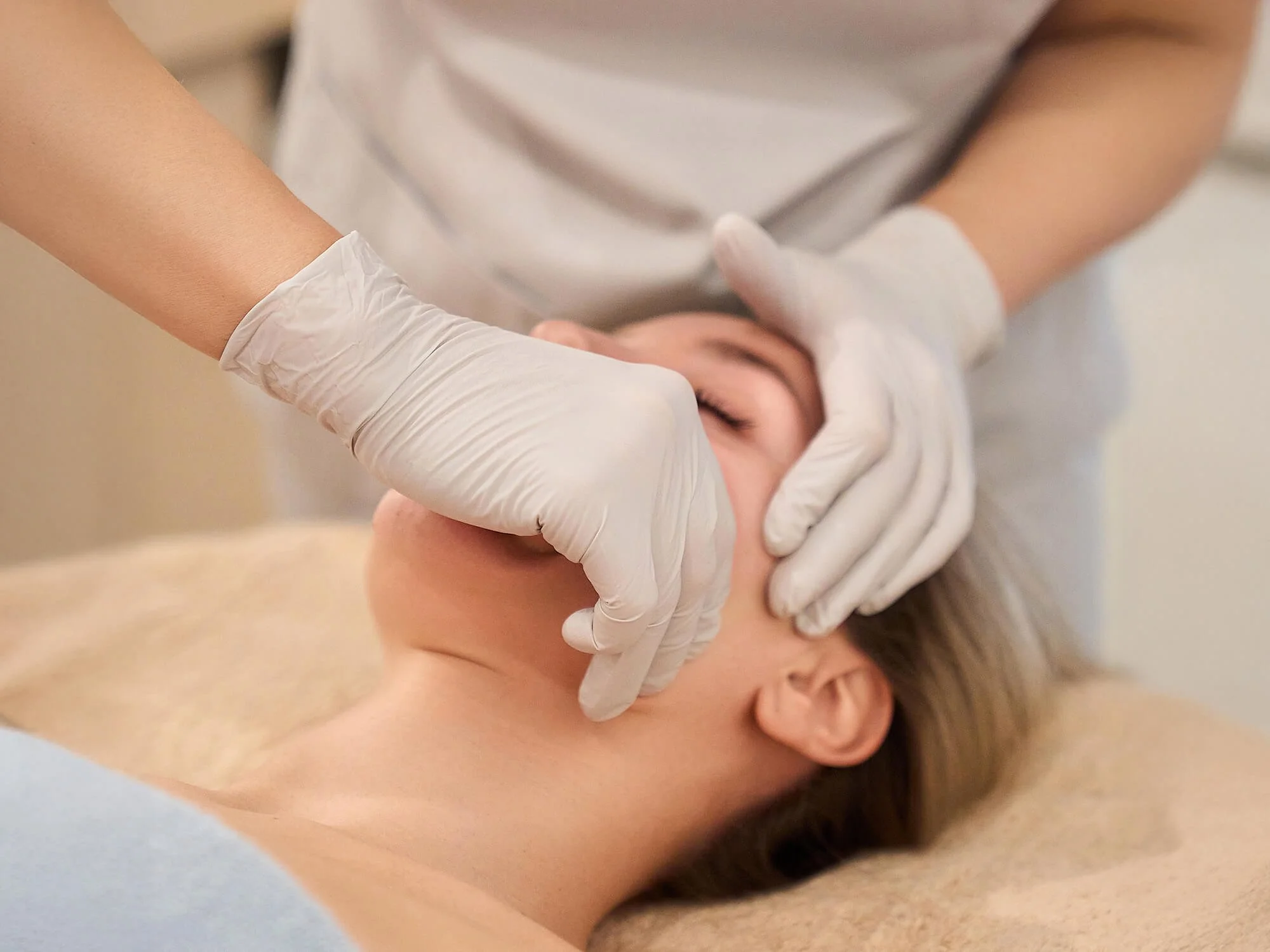
The first thing most people register after a buccal massage session is not a new face looking back at them. It is relief. The jaw sits looser. The cheeks feel softer to the touch. The lower half of the face often looks less full, but the change people comment on first is how much easier everything feels to move.
Then the practical question arrives: how long buccal massage results last?
There is no single answer, and anyone who gives you one is guessing. Some people keep the result a few days after a first session. Others still see a difference at two weeks. It tracks with how much tension you carry, how hard and how often you clench, your sleep, your travel, your hydration, and how fast fluid tends to gather in your face to begin with. A realistic buccal massage results timeline is not one dramatic before-and-after. It is a series of small shifts that start holding better once the work is repeated.
Immediately After: What Changes Within Hours
Straight after the treatment, the face can feel oddly light. That reads as vague until you have felt it yourself. The jaw opens more easily. The cheeks feel less dense. The tissue around the mouth pulls less when you talk or smile.
In the mirror you might catch a cleaner line along the jaw, or slightly less fullness through the mid-face. If one side had been holding more than the other (which is common, and something the practitioner works differently on each side because of it), that side may look more even.
The change is usually not drastic. You still look like you, just less tired and less clenched. Some redness is normal, particularly wherever a stubborn area got more attention, and mild tenderness can follow too. Intraoral (buccal) massage works both across the outside of the face and inside the mouth, with gloves, so the tissue has been handled more directly than it would be in a surface facial.
Give it a few hours before you decide anything. The face keeps settling after you leave, which is exactly why an immediate photo tells a partial story. A lot of buccal massage before and after NYC images get taken minutes after the table, when circulation is up and puffiness has just been moved through. That shows a real change. It does not tell you how the result reads the next morning.
What surprises people most at this stage is how calm the work itself is. Clients often expect intraoral (buccal) massage to be uncomfortable and instead find it gentle enough to drift off on the table, the kind of session you leave feeling both lifted and unusually settled. That the lifting and brightening can show up after a single visit, with no discomfort along the way, is part of why the immediate impression tends to stick.
The First Few Days
Days one through three tend to be when the result feels freshest. The jaw may still feel loose on waking. The face can look less heavy first thing, and the usual tightness around the lips or temples stays milder.
This is also the stretch where people start catching their own habits, often for the first time:
● clenching while working through an inbox, jaw set without any decision to set it;
● pressing the teeth together while driving or sitting in traffic;
● chewing almost entirely on one side, meal after meal;
● holding the shoulders and neck up near the ears during a tense call.
Those patterns are the point. The session releases the tension already sitting in the tissue. It cannot stop you from rebuilding it. Walk straight back into the same habits and the result fades sooner, which does not mean the treatment failed. It means the cause of the tension is still part of your ordinary day, and one appointment was never going to remove your job or your commute.
Week 1: The Visible Lift Softens
By the end of the first week, the sharpest edge of the result usually settles. The jawline may not look quite as defined as it did on day one. Puffiness can start creeping back after a bad night, a salty dinner, a few drinks, or a genuinely stressful week.
The face rarely returns all the way to where it started, though. The jaw often stays easier to move. One cheek may still feel less tight than its partner. You may notice you are not waking with the same heaviness across the lower face.
After a first appointment, this is the stage worth watching closely. Do not grade the session only by how lifted you look in the mirror. Notice when the tightness comes back, where it shows up first, and whether one side gives way faster than the other. That information tells you far more about your own rhythm than the day-one result did.
Week 2: The Result Becomes Easier to Read
Around week two, most people can finally read their own timeline with some confidence. Maybe the puffiness is back but the jaw still feels better. Maybe the face still looks balanced while the tension around the mouth has returned.
This is frequently the sensible point for a second session, especially if you started with a short series rather than one treatment and a long silence. If you want a way to actually track it rather than going on impression:
Note how your face felt on day one, in plain terms (jaw ease, puffiness, which side was tighter).
Check the same three things at day three, day seven, and day fourteen.
Mark the day the old tension clearly starts coming back.
Bring that day to your practitioner, because it sets your real interval better than any standard package would.
Book the next session around that point, not weeks after the tension has fully re-established.
The reason repeated work reads differently from one isolated session is not mysterious. The nervous system holds a default level of tension, and a single release does not reset that default. Consistent input over a few weeks is what lets the tissue settle into a lower baseline, which is the mechanism behind regulation before result rather than a marketing line.
Weeks 3-4: Small Changes Begin to Add Up
By weeks three and four, regular sessions can start feeling less dramatic. That is not a problem. The first treatment usually gives the biggest contrast simply because there is more tension and more fluid to clear. Later sessions do not hand you the same stark before-and-after, because the face is no longer sliding all the way back to the starting point between visits.
The jaw may stay softer for longer. Morning puffiness may clear faster. One side may stop tightening as quickly as it used to.
Here is where the phrase "cumulative structural shifts" needs honesty. Intraoral (buccal) massage does not move bone or carve a permanently new face. The changes are seen in soft tissue, in muscle tension, and in fluid. When those calm down and the lymphatic pathways through the neck and décolleté drain more freely, the cheeks can rest differently and the lower face can look more defined. It remains something you maintain, not something that locks in and stops needing attention.
This is also the window where the value of a short series becomes clearest. People who commit to roughly weekly work across three sessions tend to report changes that a single visit never delivers: smile lines and forehead lines reading softer, tension noticeably lower, longstanding jaw and TMJ discomfort easing off. Those are not first-day mirror effects. They are what accumulates once the tissue stops fully resetting between appointments.
What Consistent Sessions Build Over Months
Across several months, the real improvement is usually steadiness rather than any single dramatic result. What that steadiness tends to look like:
● the face swinging less between relaxed one day and tightly clenched the next;
● puffiness that still shows up but feels less stubborn and clears sooner;
● a jaw that recovers faster after a hard week rather than staying locked;
● a clearer read on your own face, so you know which side goes first and what sets it off.
That last one changes how you manage the schedule. Once you can feel travel, poor sleep, or a run of long workdays starting to tighten the jaw, you stop guessing at intervals. Some months you may want a session every two weeks. Through calmer stretches, every three or four weeks is often enough. The work still moves across the full territory each time, décolleté and neck and face and scalp, because treating any of those in isolation lets the others pull the result back.
Part of why the results hold over this longer arc is that the attention is not narrowly on the face. Clients who have tried many practitioners for buccal, intraoral, and TMJ work often describe the difference here as coming from the whole approach: the neck, shoulders, and scalp addressed alongside the face, and the protocol shaped to their particular problem areas rather than run the same way on everyone. The steadiness is a product of that breadth, not of any one technique applied harder.
The long-term outcome is not a permanent lift, and it would be dishonest to sell it as one. It is a face that spends far less of its time feeling tight, swollen, or overworked, and a result that no longer disappears as fast as it did after that very first appointment.