
Stratosphere or Manual Lymphatic Drainage: Choosing the Right Body Treatment
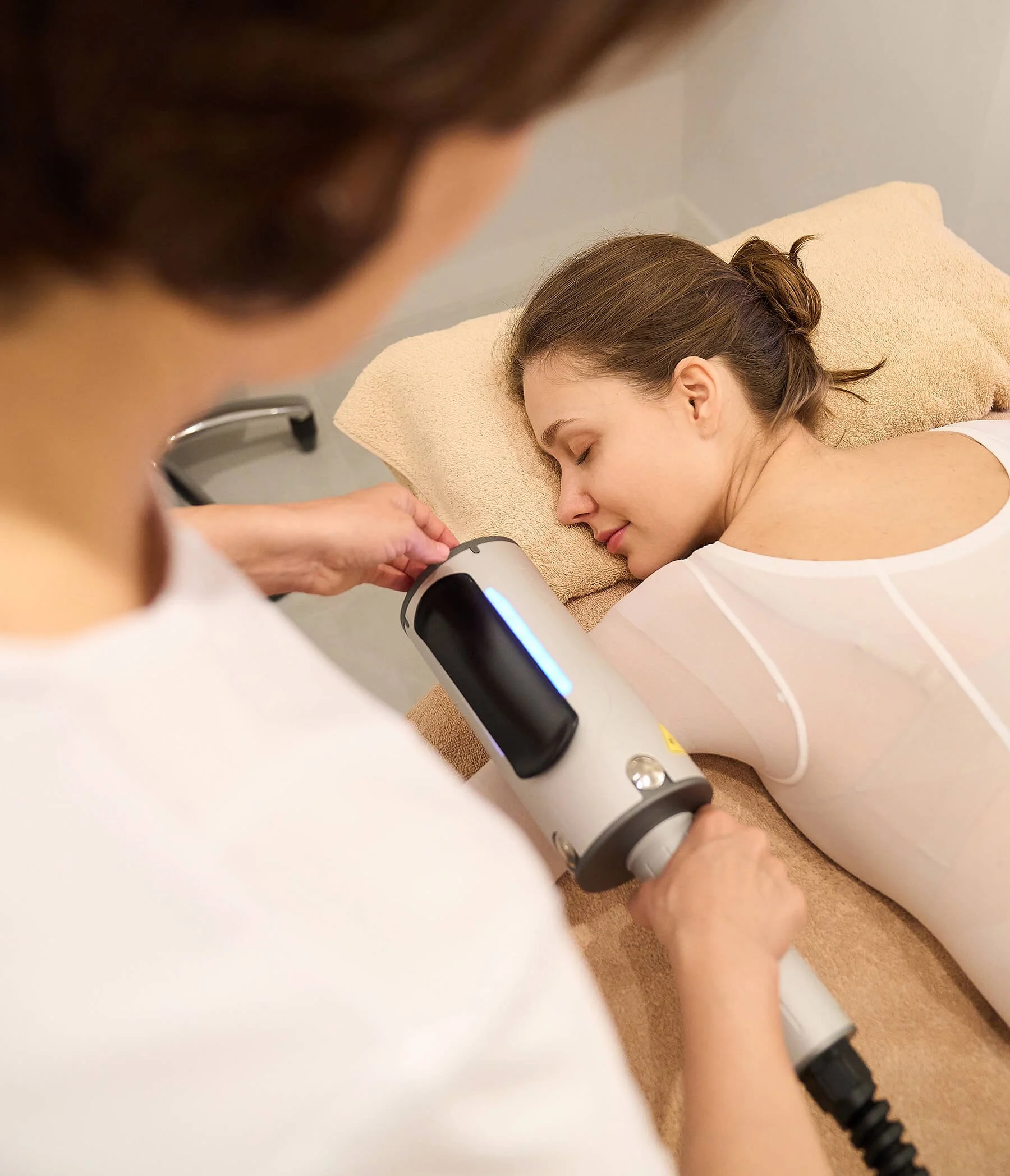
Both Stratosphere Body Sculpt and Manual Lymphatic Drainage can be used to address fluid retention, puffiness, and a sense of heaviness in the body, but they work through very different forms of mechanical input. One uses practitioner-guided compression and vibration delivered through the Stratosphere device; the other relies entirely on trained hands to assess and respond to the tissue in real time. They overlap in what they target and diverge sharply in how they get there, and the gap between them is exactly what makes the stratosphere vs lymphatic drainage nyc decision worth thinking about rather than leaving to chance.
Before the mechanics, a plain orientation helps, because the fastest way to choose badly is to treat these as interchangeable:
| Stratosphere Body Sculpt | Manual Lymphatic Drainage | |
|---|---|---|
| Delivered by | machine, compressive microvibration | a practitioner's hands |
| Best at | broad-area mechanical stimulation, fluid-movement support, and body contouring | precise, responsive, hands-on lymphatic work |
| Adapts in real time | practitioner adjusts focus, direction, and intensity within the device protocol | to what the tissue is doing that moment |
| Typical use | fluid retention, contouring, general reset | localized fluid retention, swelling, gentle hands-on drainage, and selected post-procedure support when appropriate |
| Coverage | broad and even | directed exactly where it is needed |
How Stratosphere's Compressive Microvibration Works
Stratosphere is technology-led, and its method is right there in the name. It applies compressive microvibration across the body, a rhythmic combination of gentle pressure and fine vibration that provides rhythmic mechanical compression and vibration designed to support fluid movement, local circulation, and tissue stimulation. The experience is deliberately undramatic: the treatment uses rhythmic mechanical input rather than deep manual pressure and is generally designed to feel comfortable.
Where the machine genuinely earns its place is coverage and consistency. One advantage of the device is its ability to deliver repetitive mechanical stimulation efficiently across larger treatment areas. Across larger body areas, it allows the practitioner to deliver controlled, repetitive compression and vibration while adjusting the treatment according to the client's goals and tolerance. It is well matched to fluid retention, to a body that feels heavy, puffy, or tight after travel, prolonged sitting, or changes in routine, and to general contouring where the aim is the broad-area support to help ease tension and promote natural movement.
The concerns Stratosphere fits most cleanly tend to look like this:
overall puffiness and fluid retention with no single culprit;
a post-travel or post-stress reset when the whole body feels sluggish;
contouring across the waist, hips, abdomen, thighs, back or arms;
muscle tension paired with a wish for a lighter, more defined feeling.
Stratosphere is often recommended as a course because body-contouring and tissue-quality goals are generally approached through repeated sessions rather than a single treatment. The key difference is that the device provides mechanical stimulation, while manual work gives the practitioner direct tactile feedback from the tissue. With MLD, pressure, direction, rhythm, and time spent in each area can be adjusted moment to moment through the hands. That judgment belongs to a person, which is where the second treatment comes in.
How Manual Lymphatic Drainage Works, and Where It Differs
Manual lymphatic drainage is the older, more precise discipline, and it is entirely hands-on. A practitioner uses light, rhythmic, direction-specific techniques intended to support lymphatic fluid movement and reduce the sensation or appearance of swelling where appropriate. The pressure is deliberately gentle, because MLD traditionally uses very light, rhythmic pressure because superficial lymphatic structures are located within the skin and subcutaneous tissue and the technique is designed around gentle tissue stretch rather than deep pressure.
The defining advantage is responsiveness. A skilled set of hands reads the tissue as it works, assessing where swelling, tenderness, or tissue changes are most apparent and adapting the treatment accordingly, and spending time where a specific area needs it rather than distributing effort evenly for its own sake. This hands-on adaptability can be particularly useful when working with localized swelling or with clients recovering from certain procedures, provided manual lymphatic work has been cleared as appropriate by the treating medical team, where SENSO's RecoveryFlow uses gentle manual technique tailored to each client to provide gentle, individualized support for postoperative swelling and comfort when manual treatment is appropriate and has been medically cleared.
Manual lymphatic drainage is a specialized hands-on technique rather than a conventional deep-pressure massage, and its effectiveness depends on appropriate training, assessment, and technique. For clients looking for skilled lymphatic drainage in NYC, the value is in accurate assessment, appropriate pressure, and a treatment that responds to the body rather than following a generic massage sequence.
Manual drainage tends to be the right answer when the concern is specific rather than general:
selected post-procedure recovery, when gentle hands-on work has been medically cleared and individualized to the client;
fluid or puffiness concentrated in one area rather than spread across the body;
tissue that is sensitive or delicate and needs a treatment that adapts moment to moment.
Which One Fits Your Goal, or Whether You Need Both
Held side by side, the choice usually resolves itself around a single question: does your goal call for broad, consistent activation, or for precise, responsive drainage? For broad concerns such as puffiness, heaviness, muscle tension, or body-contouring goals, Stratosphere may be a good fit. When the concern is more localized, the tissue is particularly sensitive, or a gentler hands-on approach is preferred, Manual Lymphatic Drainage may be more appropriate. Post-surgical treatment should be considered separately and only when appropriate for the procedure and medically cleared. That is the honest core of any body sculpting treatment comparison manhattan clients are weighing, and most of the time it points clearly one way.
For some clients, using both approaches in the same treatment can be particularly useful because they offer different forms of tissue stimulation, and it is exactly what SENSO built its PureDetox treatment around. There, manual lymphatic drainage and Stratosphere technology run in the same session: the manual portion provides precise, responsive lymphatic work, while Stratosphere adds broader mechanical compression and vibration across larger areas, so the treatment covers both the specific and the general in one visit.
Across a longer arc, a sensible cycle tends to move like this:
The treatment plan depends on the client's goal. Some clients benefit from Stratosphere as a course for broader body-contouring and fluid-retention concerns. Others benefit more from targeted manual work. PureDetox combines both approaches when there is a reason to use them together. Maintenance frequency is then adjusted according to the client's response and goals.
Every one of these treatments opens with a consultation and a plan built to the individual, because the right answer depends on your body and your goal rather than a template, and post-surgical swelling should always be discussed with the treating medical team, and any lymphatic or body treatment should be performed only when it is appropriate for the procedure, stage of recovery, and individual client.