
The Biological Architecture of Flow: Understanding Facial Puffiness
Facial puffiness is usually blamed on sleep, salt, or “water retention.” Those things can play a role, sure. But the real story sits deeper than that.
Your face has a fluid system.
Under the skin, there’s a busy world of tiny vessels, connective tissue, muscles, fascia, and fluid-filled spaces between cells. This is where puffiness begins. Not on the surface. Not in the cream you forgot to apply. In the way fluid moves - or fails to move - through the tissue.
When that movement slows, the face can look swollen, soft, dull, or heavy. The under-eyes puff first. The cheeks lose sharpness. The jawline looks less defined. You may feel fine, but your face looks like it’s still waking up.
Puffiness Starts Between the Cells
Every cell in your face sits in a small fluid environment. That fluid is called interstitial fluid. It carries nutrients, proteins, waste, and chemical signals through the tissue. Research describes the interstitium as a microenvironment made of fluid, proteins, solutes, and extracellular matrix, with interstitial fluid formed by capillary filtration and cleared by lymphatic vessels.
That sounds technical, so here’s the simpler version:
Fluid enters the tissue.
The tissue uses it.
Then the lymphatic system needs to clear the excess.
When that rhythm works, your face looks lighter. When fluid lingers, puffiness appears.
This can happen after:
a salty dinner
alcohol
allergies
hormonal shifts
stress
crying
sleeping face-down
long flights
too much screen time
jaw clenching
None of these has to be extreme. The face reacts fast because the tissue is delicate, especially around the eyes.
The Lymphatic System Does the Clearing
Blood has the heart to pump it. Lymph has no single central pump.
It moves through vessel contractions, pressure changes, breathing, muscle activity, and tissue movement. Initial lymphatic vessels collect fluid from the interstitial space, while larger collecting vessels use valves and contractions to keep lymph moving forward.
That’s why puffiness often improves as the day goes on. You stand up. You speak. You move your neck. Your facial muscles work. Gravity changes the pressure. Fluid starts moving again.
Morning face is not always “bad skin.” Sometimes it’s just fluid waiting for direction.
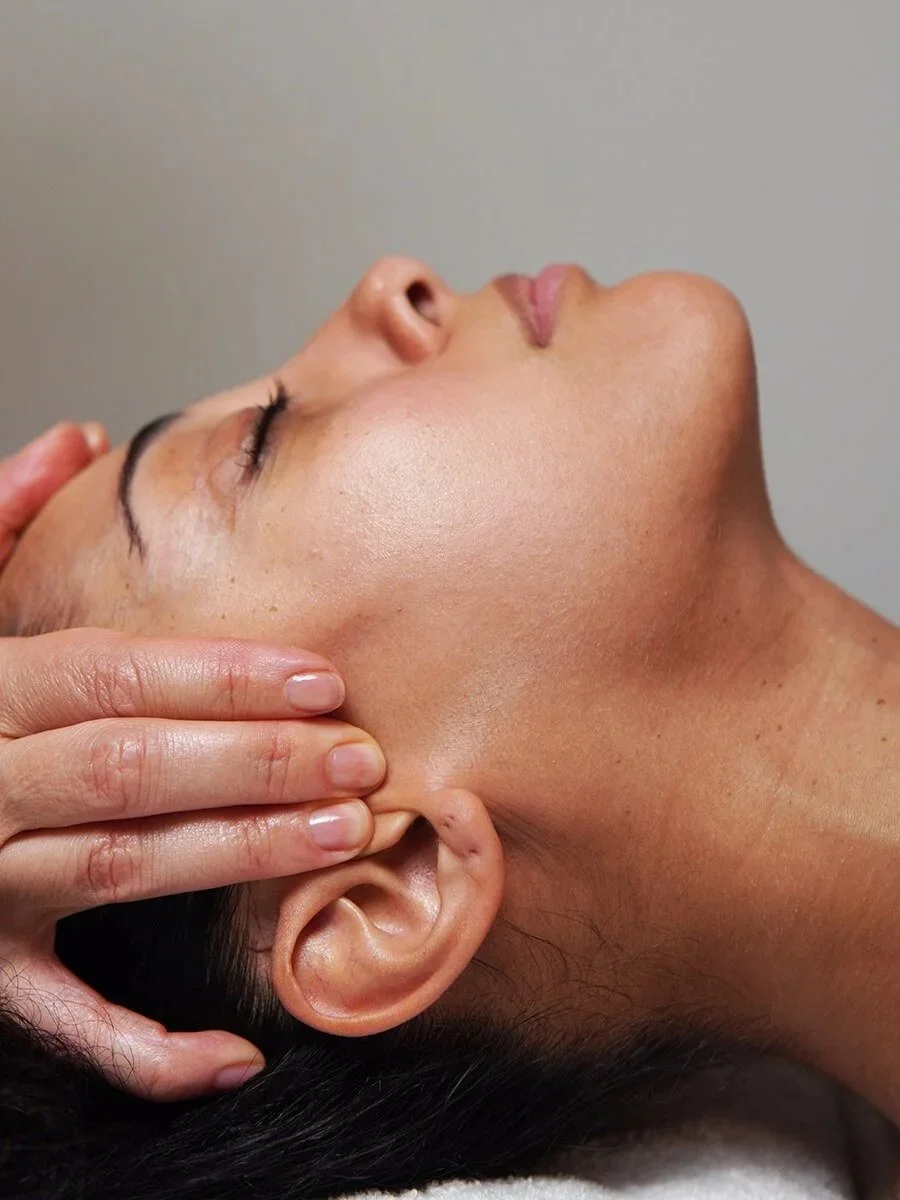
And this is also why lymphatic facial massage can work. Not because it “detoxes” anything - that word is too vague to be useful. A better explanation is that gentle, precise pressure can encourage excess fluid to move through the pathways already built into the body.
The pressure should not be aggressive. Lymphatic work is not deep-tissue work. If someone is dragging, grinding, or forcing swollen tissue, they’re missing the point.
Fascia Is the Hidden Part of the Story
Puffiness is not only about fluid. It is also about the tissue that fluid has to move through.
Fascia is connective tissue that surrounds and links muscles and other structures. Researchers describe the fascial network as part of a bodywide tensional system involved in force transmission and sensory perception.
In the face, fascia helps tissue layers glide over each other. When glide is smooth, the face feels lighter and more mobile. When glide is restricted, the face can feel dense, tight, and swollen.
This is where hyaluronic acid becomes interesting. People know it from skincare, but it naturally exists inside connective tissue too. It helps tissue layers slide. One fascia study notes that loose connective tissue contains high concentrations of hyaluronic acid, which acts as a lubricant. Without mechanical loading, it can become more viscous and restrict glide between fascial layers.
So yes, movement matters.
A face that barely moves, clenches often, sits in stress, or spends hours in laptop posture can start to feel stuck. The tissue loses some of its easy slide. Fluid does not move as freely. The result can look like puffiness, even when the deeper issue is tension plus stagnation.
Tension Can Make Puffiness Look Worse
Think about how your face feels after a stressful week.
The jaw is tight. The temples feel busy. The neck feels short. The mouth looks compressed. The lower face may seem heavier.
That is not random.
Jaw and neck tension can affect how the face rests and how freely fluid moves through nearby soft tissue. If the masseter muscles are overworked from clenching, the lower face may look wider or fuller. If the neck is tight, drainage around the jaw and under the chin can feel slower.
This is why a strong puffiness treatment should not only chase swelling. It should also soften the patterns that keep the face compressed.
A good treatment often works through a sequence:
open the neck and lower face first
use light lymphatic strokes to encourage drainage
release tension in the jaw, cheeks, and temples
improve glide in the fascial layers
calm the nervous system so the face stops bracing
That last part matters. A stressed face rarely looks lifted and fresh. It looks guarded.
Morning Puffiness vs. Persistent Puffiness
Morning puffiness usually moves. It is worse when you wake up, then improves after a few hours.
Persistent puffiness is different. It sticks around. The tissue may feel thick or heavy most days. The under-eyes stay swollen. The lower face looks soft even when your routine is normal.
That can happen with ongoing allergies, inflammation, hormonal changes, chronic stress, jaw tension, or poor lymphatic movement. Skilled facial work may help, but sudden swelling, one-sided puffiness, pain, redness, or breathing symptoms should be checked by a doctor. No facial treatment should pretend to solve that.
For everyday puffiness, though, the goal is simple: improve flow.
What Helps Between Treatments
You do not need a complicated routine. You need fewer habits that trap fluid and more habits that help it move.
Try this:
sleep with your head slightly elevated if mornings are puffy
avoid very salty meals late at night
move your neck during long screen days
stop pressing your tongue hard into your palate
notice when you clench your jaw
use gentle pressure around the eyes
take short walks to wake up circulation
drink water, but don’t expect water alone to fix everything
The face belongs to the body. If the body is stiff, stressed, and still all day, the face usually shows it.
The Bottom Line
Facial puffiness is not just a cosmetic issue. It is a movement issue.
Fluid enters the tissue and needs to clear. Fascia needs glide. Muscles need to release. The lymphatic system needs pressure changes and motion to do its job well.
When those systems slow down, the face looks swollen or tired. When they move better, the face looks clearer, lighter, and more defined.
That is the real science behind a depuffed face. No miracle claims. No “detox” language. Just biology, pressure, tissue, and flow.