
TMJ Explained: The Hidden Cause of Facial Tension, Headaches and Asymmetry

Every so often a patient comes in convinced they need something done to their face. A filler consultation, maybe. A lifting treatment.
Sometimes they think they're developing premature aging. Sometimes they think they're stressed. Sometimes they're absolutely right about the stress part.
Then we start talking.
They mention waking up with a sore jaw, a clicking sound near the ear. Headaches that arrive every afternoon. One cheek looks slightly fuller than the other. The smile feels uneven. Their dentist has asked whether they grind their teeth at night. And suddenly we're having a completely different conversation. Because the issue may not be the skin at all. It may not even be the face in the way most people think about the face. Quite often, the story begins with the temporomandibular joint.
The TMJ.
A tiny structure. Small enough to ignore. Powerful enough to make you feel miserable.
What the Temporomandibular Joint Is and How It Fails
The temporomandibular joint connects the lower jaw to the skull. You have one on each side of the face, positioned just in front of the ears.
Every time you speak, chew, yawn, laugh, clench your teeth during an unpleasant Zoom meeting, or bite into a bagel the size of a small planet, these joints are working. Thousands of times a day. Most people never think about them. Which is generally a sign that they're functioning properly.
The TMJ is designed to be remarkably sophisticated. It doesn't simply open and close like a door hinge. It slides. Rotates. Adapts. Coordinates with muscles throughout the face, head, neck, and shoulders. A surprisingly social joint, if you think about it. Everything is connected to everything else. And that's where problems begin.
When the muscles surrounding the jaw become chronically tight, the joint can lose efficiency. Movement patterns become less balanced. Some muscles start overworking while others become inhibited.
The body is very loyal to its habits. Even terrible ones. Clenching. Grinding. Stress-related jaw tension. Poor posture. Previous injuries. Dental issues. Sleep disturbances. Over time, these factors can create excessive strain throughout the entire system.
The result isn't always dramatic. Sometimes it's just a feeling that something is off. The jaw feels tired. The face feels heavy. The muscles seem permanently switched on. As dysfunction progresses, the surrounding tissues often compensate. Until eventually they can't.
That's usually when symptoms become impossible to ignore.
Symptoms Most People Mistake for Other Issues
TMJ dysfunction has a remarkable ability to disguise itself.
People frequently spend years treating symptoms without realizing the jaw may be involved. Headaches are one of the most common examples.
Not every headache originates from the jaw, obviously. But chronic muscular tension around the temporomandibular joint can create referral patterns that travel into the temples, forehead, around the eyes, and even into the scalp.
Patients often describe a dull pressure that seems to wrap around the head. Others experience sharp pain behind the eyes. Some feel as though they're carrying an invisible helmet made entirely of tension. Not a perfect accessory.
Jaw discomfort itself can be surprisingly subtle. Instead of pain, people may notice stiffness when chewing, clicking sounds, limited opening, or fatigue after talking for long periods. Then there are the neck and shoulder symptoms. The jaw rarely suffers alone.
Muscles throughout the neck frequently become involved. The shoulders tighten. Posture changes. The entire upper body starts participating in a problem that technically began in a very small joint.
The human body has a gift for turning local issues into group projects. Facial asymmetry is another concern that often brings patients into aesthetic practices. Many assume one side of the face is aging faster than the other. Sometimes that's true. Sometimes the difference is being amplified by chronic muscle imbalance. Years of uneven tension can subtly influence facial contours. One masseter muscle may become larger than the other. Certain tissues may appear tighter. The smile can look less symmetrical. This relationship between muscular imbalance and TMJ facial asymmetry is becoming increasingly recognized within both therapeutic and aesthetic medicine.
Patients are often relieved to discover that not every asymmetry is permanent structural change. Sometimes tissue is simply responding to years of mechanical stress. The face remembers habits. Very well, unfortunately. Then there are the symptoms nobody associates with the jaw at all:
Ear pressure
Ringing sensations
Difficulty relaxing
Morning facial fatigue
Poor sleep quality
The sensation that you're constantly carrying tension but can't identify where it's coming from. Many individuals searching for jaw tension headaches treatment Manhattan services have already seen multiple practitioners before anyone examines the jaw closely.
And when someone finally does, things start making a lot more sense.
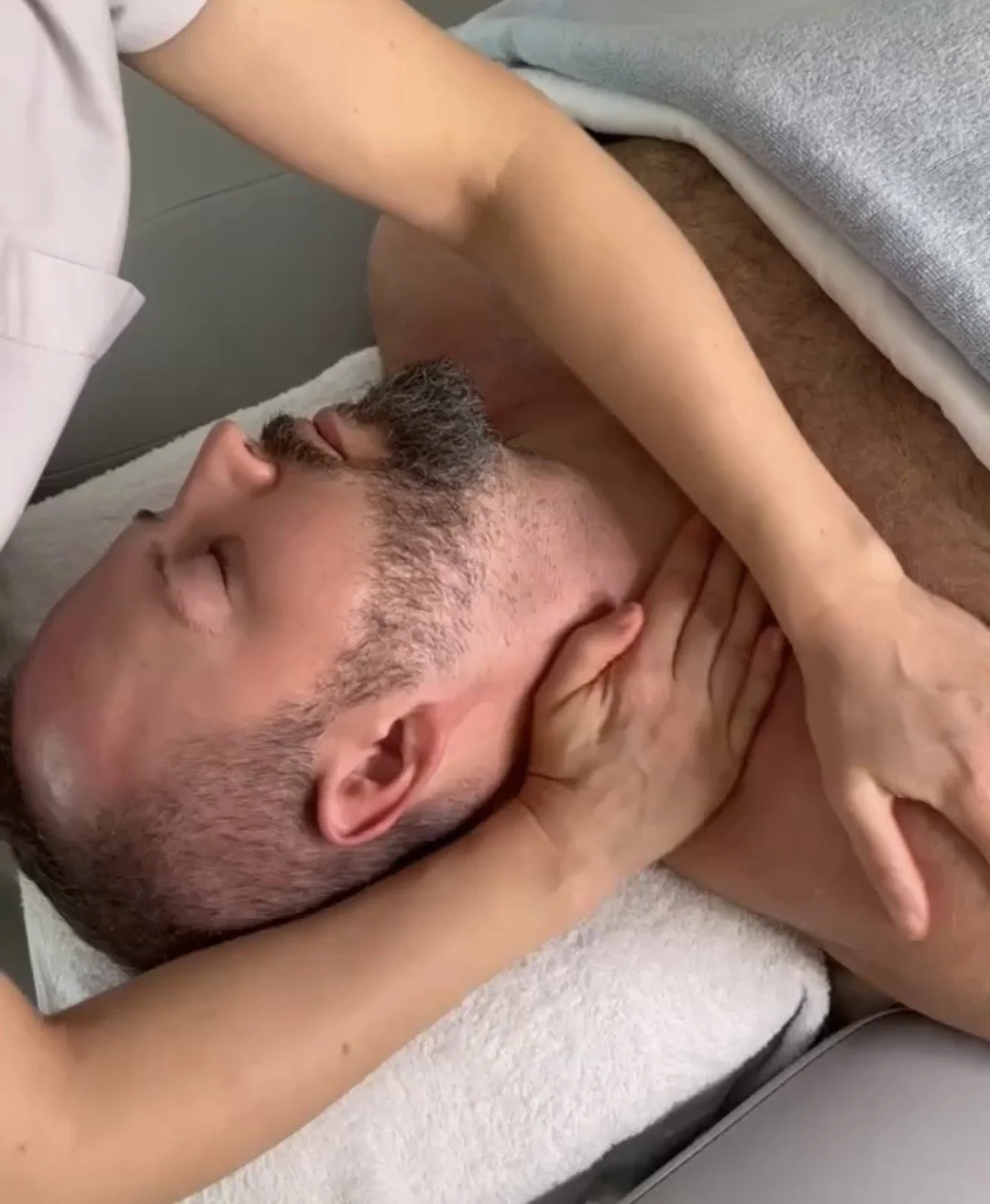
How Intraoral Massage Addresses the Root Cause
One challenge in treating TMJ-related tension is that many of the involved muscles are difficult to access from the outside. They're deep. Hidden. A bit stubborn, honestly.
That's where intraoral massage becomes particularly valuable.
The technique involves working both externally and inside the mouth to access muscles that influence jaw mechanics and facial tension. It sounds unusual when people first hear about it. Then they experience it.
The masseter muscles, which help close the jaw, are common sources of chronic tension. The pterygoid muscles, located deeper within the jaw system, frequently contribute to dysfunctional movement patterns as well.
These structures can become remarkably tight. Intraoral techniques allow practitioners to address these tissues directly rather than merely working around them.
The goal is not force — in fact, excessive force tends to be counterproductive. The objective is restoring mobility, reducing protective muscular guarding, and encouraging healthier movement patterns throughout the jaw complex. When this happens, several things may occur:
Jaw opening often improves
Facial tension decreases
Muscular compensation patterns begin to soften
Headaches associated with chronic jaw tension may become less frequent
Even facial balance can appear improved as overactive muscles relax and movement becomes more symmetrical.
SENSO experts have spent years working with the relationship between facial anatomy, muscular tension, connective tissue restrictions, and aesthetic outcomes. One of the most rewarding aspects of this work is watching patients realize that the discomfort they've normalized for years may actually be treatable.
That's an important moment because chronic tension has a way of becoming invisible to the person carrying it.
Conclusion
The temporomandibular joint may be small, but its influence extends surprisingly far.
A dysfunctional TMJ can contribute to headaches, facial tension, neck discomfort, sleep disturbances, and visible asymmetry that many people mistakenly attribute to unrelated causes. The challenge is that these symptoms rarely arrive wearing a name tag. They show up disguised as stress. Bad posture. Another headache. Another tense morning. Aging. Another day of feeling slightly uncomfortable without knowing why.
Understanding the role of the jaw changes that picture. When the underlying mechanics improve, the effects often extend far beyond the joint itself. The face may feel lighter. Movement becomes easier. Tension softens. Expressions appear more natural.
And perhaps most importantly, people stop spending so much energy fighting symptoms that were never the root problem in the first place.
Sometimes the body whispers before it shouts. The TMJ is often one of those whispers.