
Your First Buccal Massage at SENSO: What to Expect

There is a very specific look people have when they arrive for their first buccal massage. Part curiosity. Part skepticism. Which, to be fair, is a reasonable reaction.
Buccal massage isn't one of those treatments people grow up hearing about. Nobody's grandmother was casually discussing intraoral facial work over Sunday dinner.
Most patients discover it after going down a rabbit hole online. One article leads to another. Someone mentions facial tension. Someone else talks about jaw pain. Then suddenly it's midnight and they're watching videos about muscles they didn't know existed.
A week later they're booking an appointment. And wondering what exactly they've signed up for.
If you're preparing for your first buccal massage NYC experience, here's an honest explanation of what actually happens before, during, and after treatment. No dramatic promises. No mystical language. Just the reality.
Before the Session
The good news is that preparing for a buccal massage is refreshingly uncomplicated.
There are no elaborate pre-treatment protocols. No week-long detoxes. No expensive products you suddenly need to purchase. Frankly, the beauty industry occasionally has a tendency to make simple things sound complicated.
This isn't one of those situations.
Arrive with a clean face whenever possible. If you're wearing heavy makeup, your practitioner may need to remove part of it before beginning treatment.
Hydration helps. Not because water is magical. The internet already has enough magical water stories. Tissues generally function better when the body is adequately hydrated, and that includes connective tissue and muscle.
It's also wise to avoid arriving immediately after a very large meal. Nothing catastrophic happens if you do. It's simply more comfortable for most people if they're not simultaneously digesting an entire brunch menu while receiving facial work.
One thing patients often ask is whether buccal massage hurts. We'll talk about that in more detail shortly, but the short answer is no — not in the way most people imagine. There can be moments of sensitivity. There can be areas that feel surprisingly tight. The purpose is restoring mobility and releasing restriction, not winning a competition against your own nervous system.
If you're coming to your first SENSO appointment, perhaps the most useful thing to bring is realistic expectations.
Many patients have seen dramatic before-and-after photographs online. Some of those changes are genuine. Some are influenced by lighting, angles, facial expression, and the mysterious powers of modern photography.
The real benefits of buccal massage often begin with how the face feels. The visual changes frequently follow.
During the Session
This is the part everyone wants to know about. What does it actually feel like?
The honest answer is that it's difficult to compare to anything else. A facial isn't quite right. A traditional massage isn't quite right either. Buccal massage occupies its own strange little category.
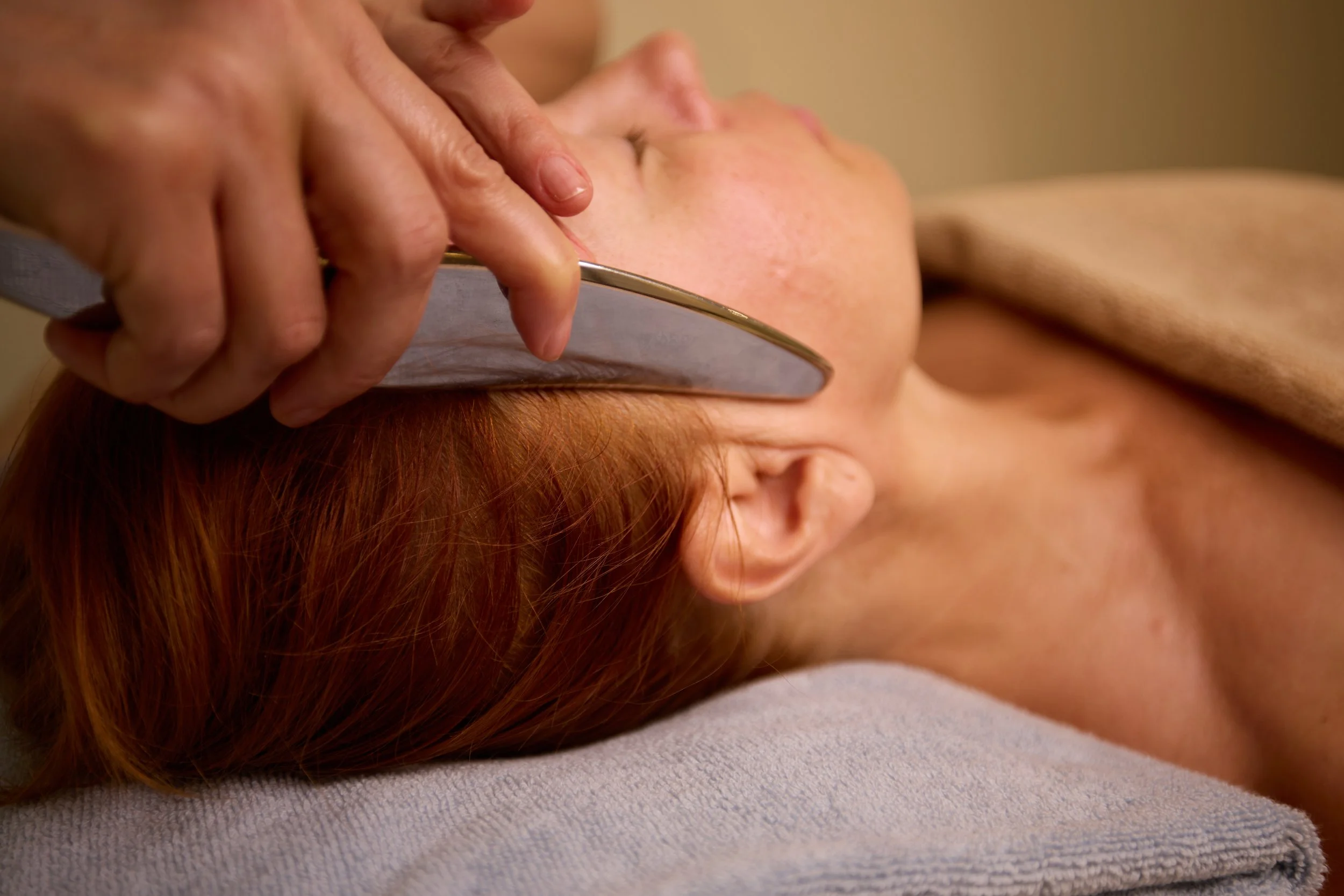
The treatment typically begins with external work on the face, neck, jaw, and surrounding tissues. Your practitioner assesses areas of tension, mobility, and muscular activity. Some regions feel immediately relaxed. Others reveal themselves as overachievers. The jaw is often an overachiever.
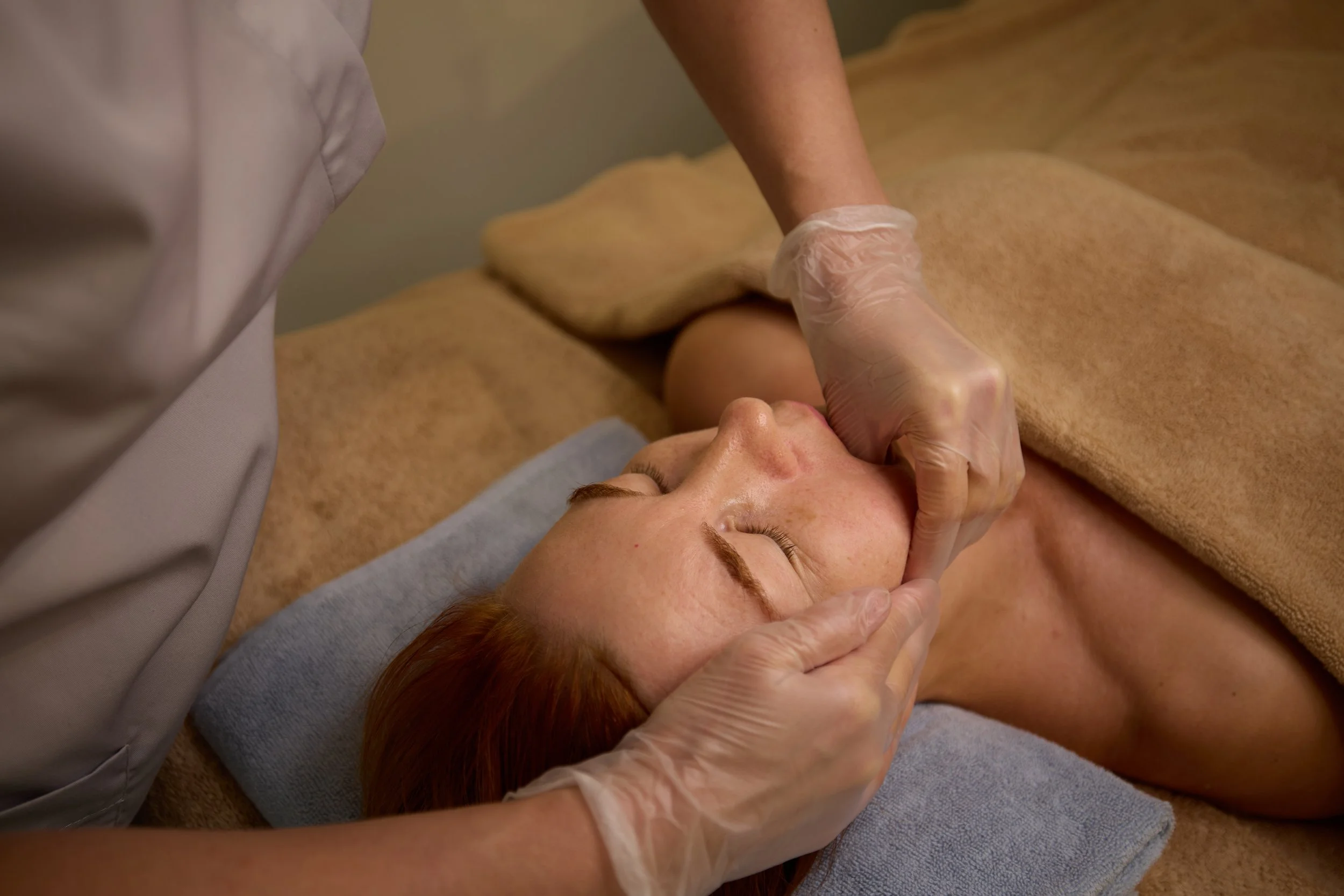
Then comes the intraoral portion. Gloves are worn, of course. At this point, one hand may work inside the mouth while the other works externally. The muscles are gently engaged from both directions, allowing access to structures that are difficult or impossible to reach from the surface alone.
The first sensation is usually surprise. Not discomfort. Surprise. Because many people have never felt these muscles being addressed directly. It's like discovering an extra room in a house you've lived in for years. You didn't know it was there. Now suddenly somebody is turning on the lights.
Certain areas may feel tender. This is especially common in people who clench their jaws, grind their teeth, experience stress-related tension, or spend long hours working at a computer.
As restrictions begin to release, patients often notice unexpected sensations. Warmth. Softness. A feeling that the jaw is somehow wider or lighter. Occasionally someone sits up afterward and immediately starts moving their mouth around like they're test-driving a new appliance. Not consciously — it just happens.
The body notices when movement becomes easier. One thing that surprises first-time patients is how relaxing the experience can become. Initially they're focused on the novelty. Then the nervous system starts settling. Breathing slows. Facial muscles stop negotiating with gravity quite so aggressively. And the entire experience begins feeling less unusual than expected. That's often the moment people realize how much tension they've been carrying.
Not because somebody tells them. Because the tension is suddenly gone.
After the Session
After treatment, most people immediately look in the mirror. This is human nature. Nobody can resist. The first thing they usually notice isn't a dramatic transformation. It's a change in expression. The face often appears softer. Less guarded. Less compressed.
Jaw mobility may feel improved. The cheeks may appear more relaxed. Some individuals notice better symmetry immediately, particularly if muscular imbalance was contributing to visible tension patterns. Others experience gradual changes over the following days.
The body doesn't always operate on a strict schedule. Sometimes tissues respond quickly. Sometimes they prefer a slower conversation. Mild tenderness can occasionally occur afterward, especially if significant tension was present before treatment. This generally resolves quickly.
Most people return to normal activities immediately. No downtime. No hiding indoors. No explaining mysterious bruises to coworkers.
Another common question involves frequency — "How often should buccal massage be performed?" That depends.
Some people seek treatment because of chronic jaw tension. Others are interested in facial mobility, stress relief, or aesthetic maintenance. The appropriate schedule varies based on individual goals, anatomy, and lifestyle. Your practitioner can recommend a treatment plan based on your specific situation rather than a generic timeline pulled from the internet.
Which is usually a better strategy.

Conclusion
If you're searching "buccal massage what to expect Manhattan" online, the most important thing to understand is that the treatment is far more practical than mysterious.
Despite the growing popularity and social media attention, buccal massage is fundamentally about anatomy. Muscles. Connective tissue. Mobility. Function.
The face is not a static structure. It moves constantly, adapts continuously, and reflects patterns accumulated over years of expression, posture, stress, and habit. Buccal massage works with those patterns rather than simply trying to cover them. That's part of its appeal.
Your first session may introduce you to muscles you didn't know existed. It may reveal tension you thought was normal. It may leave your jaw feeling unexpectedly relaxed and your face feeling a little more like itself.
That's the perfect outcome — not looking like someone else or twenty years younger overnight, but discovering how different your face can feel when it isn't carrying quite so much unnecessary tension.