
Buccal Massage Results Timeline: What to Expect Week by Week
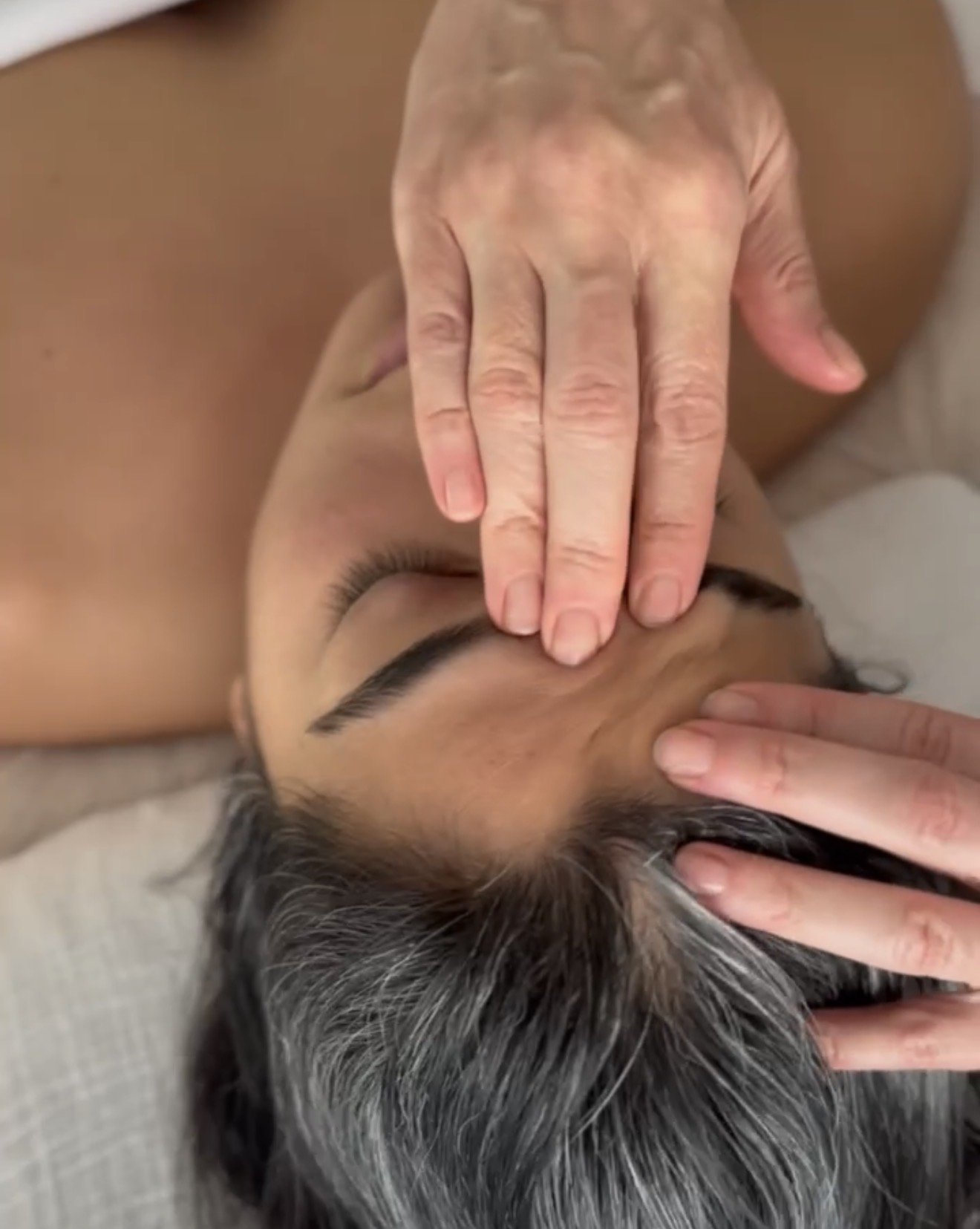
The first thing people usually notice after a buccal massage is not a dramatic new face.
It is relief.
The jaw feels less wound up. The cheeks feel softer. Your face may look a little less puffy, especially around the lower half, but the biggest change is often how much easier everything feels.
Then comes the obvious question: how long does it last?
There is no single answer. Some people hold the result for a few days after their first session. Others still notice a difference two weeks later. It depends on how much tension you carry, how often you clench, your sleep, travel, hydration, and how quickly puffiness tends to return.
A realistic buccal massage results timeline looks less like one dramatic transformation and more like a series of small changes that begin to hold better with regular treatment.
Immediately After: What Changes Within Hours
Right after the session, your face may feel strangely light.
That sounds vague until you experience it. The jaw is easier to move. The cheeks do not feel as dense. The area around the mouth may feel less tight when you speak or smile.
In the mirror, you might notice a cleaner-looking jawline or less fullness through the cheeks. One side may also look more even if it was holding more tension than the other.
The change is usually subtle.
You still look like yourself. Just a little less tired, clenched, or swollen.
Some redness is normal, especially if the practitioner spent time on a stubborn area. Mild tenderness can happen too. Buccal massage works both outside the face and inside the mouth, so the tissue has been handled more directly than it would be during a basic facial.
Give it a few hours.
The face often continues settling after the appointment, which is why an immediate photo does not tell the whole story. Many buccal massage before and after NYC images are taken right away, when circulation is increased and puffiness has just been worked through. That can show a real change, but it does not tell you how the result will look the next morning.
The First Few Days
The first two or three days are usually when the result feels freshest.
Your jaw may still feel loose when you wake up. The face may look less heavy in the morning, and tension around the lips or temples may stay quieter than usual.
This is also when people start noticing how often they tighten their face without meaning to.
You may catch yourself clenching while answering emails. You might realize that you press your teeth together while driving or chew almost entirely on one side.
Those habits matter.
The massage can release the tension that is already there, but it cannot stop you from building it again. If you go straight back into the same patterns, the result may fade sooner.
That does not mean the treatment failed. It simply means the original cause is still part of your day.
Week 1: The Visible Lift Softens
By the end of the first week, the sharpest part of the result may start settling down.
The jawline might not look quite as defined as it did on day one. Puffiness may begin creeping back after poor sleep, a salty meal, alcohol, or a stressful week.
Still, the face may not feel exactly as it did before.
The jaw could remain easier to move. One cheek may feel less tight. You may notice that you are not waking up with the same heavy feeling through the lower face.
After a first appointment, this is the stage to pay attention to.
Do not judge the session only by how lifted you look. Notice when the tightness returns, where it returns first, and whether one side changes faster than the other.
That tells you much more about your own timeline.
Week 2: The Result Becomes Easier to Read
Around the second week, most people have a clearer idea of how long buccal massage results last for them.
Maybe the puffiness is back, but the jaw still feels better. Perhaps the face still looks balanced, although the tension around the mouth has started returning.
This is often when a second session makes sense, especially if you are starting with a short series rather than booking one treatment and waiting several months.
There is some early research suggesting that repeated facial massage may create measurable changes.
In one small pilot study, five adults performed facial massage twice a day for two weeks, then received a longer massage from a professional. CT scans found a slight decrease in cheek thickness and an upward shift in the most prominent part of the cheek. Researchers also recorded changes in the SMAS, a tissue layer beneath the skin, and described the findings as possible lifting and tightening effects.
The study was tiny, and it looked at facial massage in general rather than buccal massage alone.
Even so, it supports a point that makes sense in practice: repeated work may hold differently than one isolated session.
Weeks 3–4: Small Changes Begin to Add Up
By weeks three and four, regular sessions may start feeling less dramatic.
That is not a bad sign.
The first treatment often creates the biggest contrast because there is more tension and puffiness to work through. Later sessions may not give you the same “before and after” moment because the face is no longer returning fully to the starting point.
The jaw may stay softer between visits. Morning puffiness may clear faster. One side may stop tightening as quickly.
This is where the phrase “cumulative structural shifts” needs a little honesty.
Buccal massage does not move bone or permanently sculpt a new face. The changes happen in soft tissue, muscle tension, and fluid buildup. When those settle, the cheeks may sit differently and the lower face can look more defined.
But the result remains something you maintain, not something that becomes fixed forever.
What Consistent Sessions Build Over Months
Over several months, the biggest improvement is often steadiness.
Your face may stop swinging between relaxed one day and tightly clenched the next. Puffiness can still happen, but it may feel less stubborn. The jaw may recover faster after a stressful week.
You also get better at reading your own face.
You know when the tension is starting. You know which side tightens first. You know whether travel, poor sleep, long workdays, or exercise makes it worse.
That makes the schedule easier to manage.
Some months, you may need a session every two weeks. During calmer periods, every three or four weeks may be enough.
The long-term result is not a permanent lift.
It is a face that spends less time feeling tight, swollen, or overworked, and a result that does not disappear quite as quickly as it did after the first appointment.