
Postoperative Recovery: What RecoveryFlow Actually Does After Surgery
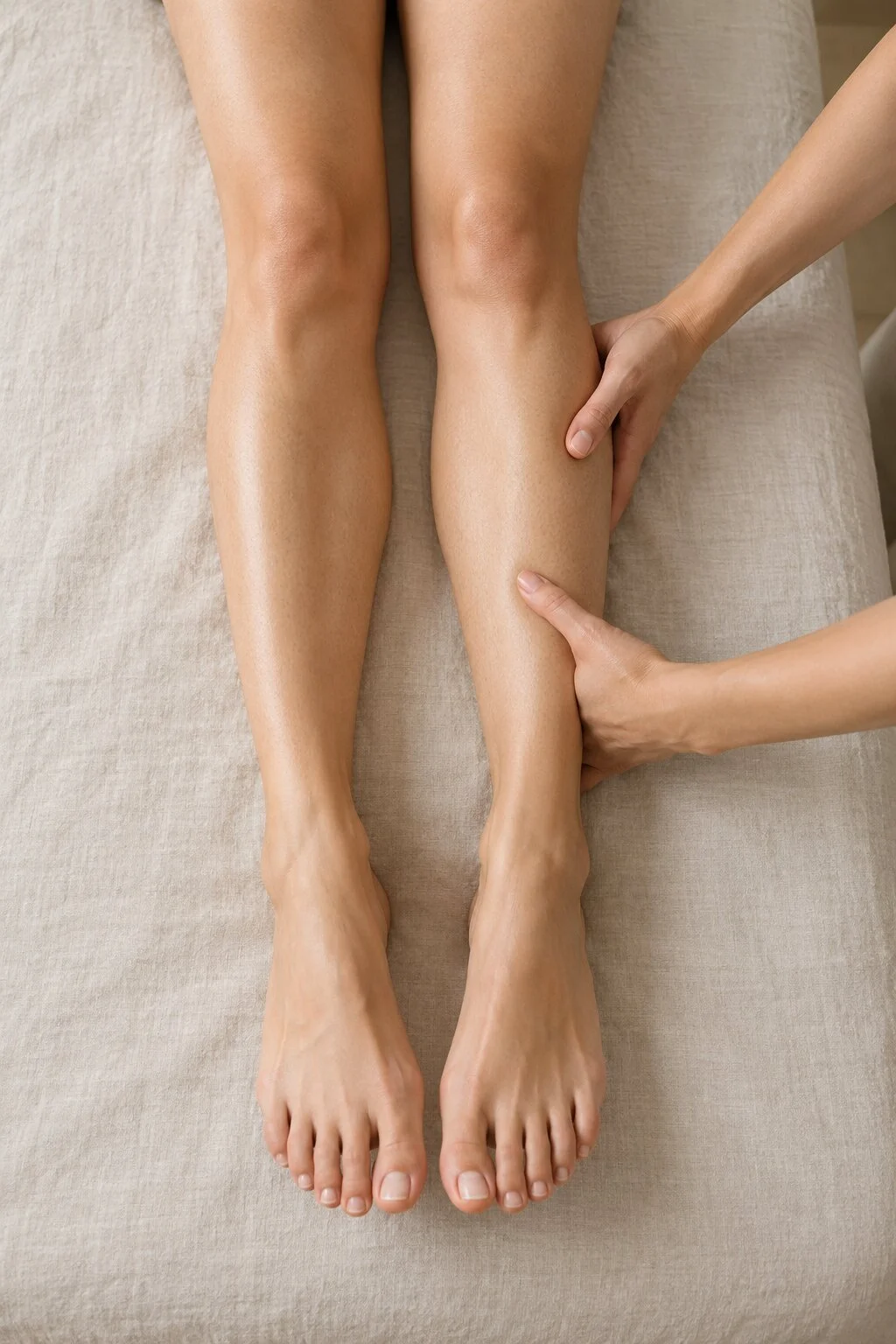
In the days after a procedure, your body is doing an enormous amount of quiet work, and you can feel it. There is swelling that seems to shift by the hour, a tightness and heaviness in the treated area, and the slightly unsettling sense of not quite knowing what is normal and what is not. Your surgeon has told you the swelling will settle in time. When appropriate for the procedure and stage of recovery, gentle hands-on support may help with comfort and the management of postoperative swelling.
That support is what a post-surgery lymphatic drainage in NYC treatment is designed to provide. It does not speed up healing through force or intervention, and it is never a substitute for your surgeon's care and instructions. What it offers is careful, hands-on support for postoperative swelling, tissue comfort, and the sense of heaviness or tightness that can accompany recovery, at a time when your body is managing a great deal at once. Understanding what it genuinely does, and what it does not, is the best way to decide whether it belongs in your recovery.
Why Swelling Happens After Surgery
Some degree of swelling is common and expected after many surgical procedures, although the amount, timing, and significance depend on the surgery and the individual recovery. Surgery triggers a normal inflammatory and healing response that can increase local fluid accumulation and tissue swelling. Postoperative swelling reflects several factors, including inflammation, changes in local circulation, tissue disruption, reduced movement, and, depending on the procedure, temporary changes in lymphatic drainage.
The lymphatic system is one part of the body's fluid-regulation and immune system, returning interstitial fluid and proteins from the tissues back toward the circulation. Some procedures can temporarily alter or disrupt local lymphatic pathways, while reduced activity during recovery can also decrease the muscle-pump activity that normally supports both venous and lymphatic fluid movement, because lymphatic flow is supported by muscle activity, breathing, pressure changes, and the intrinsic contraction of lymphatic vessels. These changes can contribute to temporary fluid accumulation and swelling in the recovering tissues.
Left to itself the body does clear this eventually, but the process can be slow, and swelling has consequences of its own worth understanding:
prolonged swelling that keeps the area tight and uncomfortable;
a heavy, congested feeling in the treated region;
localized areas of swelling or tissue fullness that may require assessment depending on the procedure and stage of healing;
temporary swelling can also obscure the early visual result while the tissues are still settling.
Some swelling is expected, but unusual, worsening, painful, asymmetric, or otherwise concerning swelling should always be discussed with the surgeon.
How Manual Lymphatic Drainage May Support Postoperative Comfort and Swelling
When appropriate and medically cleared, Manual Lymphatic Drainage can be used as a gentle adjunct to help address postoperative swelling, tissue discomfort, and the sense of heaviness that some clients experience. A trained practitioner uses light, rhythmic, direction-specific techniques intended to support superficial lymphatic fluid movement without placing unnecessary pressure on healing tissue.
The word light deserves emphasis, because it is the whole point and the most misunderstood part. This is not deep-tissue massage, and it is emphatically not vigorous work on or near a healing surgical site. MLD traditionally uses very light, rhythmic tissue stretch because many initial lymphatic vessels are superficial and deep pressure is not part of the technique. Skilled post-op drainage is defined by restraint and precision far more than by strength, which is exactly why it belongs in trained hands rather than a generic massage.
Within its honest scope, manual drainage during recovery is associated with:
supporting the management of postoperative swelling in selected clients;
easing the tight, heavy sensation in the treated area;
supporting comfortable fluid movement within the limits of the individual recovery;
a calmer, more comfortable recovery experience overall.
The careful, responsive quality of the technique is central, because a practitioner has to read healing tissue and adapt to it continuously, and that judgment is a genuine skill. This reflects the broader SENSO approach: precise, responsive manual work adapted continuously to the tissue and the client's stage of recovery. What matters just as much is knowing the limits: the honest framing is support, not acceleration or cure. RecoveryFlow does not heal you faster than your body can heal, and it does not replace anything your surgeon has prescribed. It makes one demanding part of the process easier, which is a real and worthwhile thing without being overstated into something it is not.
What to Expect in Your First Post-op Session
The single most important point comes before the session itself: timing and suitability should be determined in coordination with the treating surgeon or medical team. When it is safe to begin post-operative drainage depends entirely on your procedure and your individual recovery, and RecoveryFlow should begin only after the treating medical team has confirmed that hands-on postoperative bodywork is appropriate for that procedure and stage of recovery. That conversation comes ahead of any booking.
Once you are cleared, a first postoperative recovery massage in Manhattan session is calm and unhurried, and knowing the shape of it tends to settle the nerves:
A consultation to review your procedure, your surgeon's guidance, where you are in recovery, and any areas requiring particular care.
Gentle positioning, arranged so you are comfortable and the treated area is never under strain.
Very light, rhythmic manual work adapted to the procedure, stage of healing, and areas your medical team has cleared for treatment.
Pressure, positioning, and areas of focus are adjusted continuously according to comfort, tissue response, and the postoperative guidance provided.
Guidance on what to expect afterward and how the sessions fit into the wider recovery your surgeon is overseeing.
RecoveryFlow may be recommended as a series when repeated supportive care is appropriate, with frequency determined by the procedure, stage of recovery, surgeon's guidance, and individual response. Postoperative swelling typically changes over time as healing progresses, and any benefit from manual treatment should be viewed within that larger recovery process.
After surgery, inflammation, tissue changes, reduced movement, and, in some procedures, altered lymphatic drainage can contribute to swelling and heaviness. When medically appropriate, RecoveryFlow at SENSO offers gentle, skilled manual support focused on comfort and postoperative swelling within the broader recovery plan established by the surgical team. It works alongside your surgeon's care and never in place of it.