
Why Practitioners Are Investing in Advanced FaceBioLift™ Training
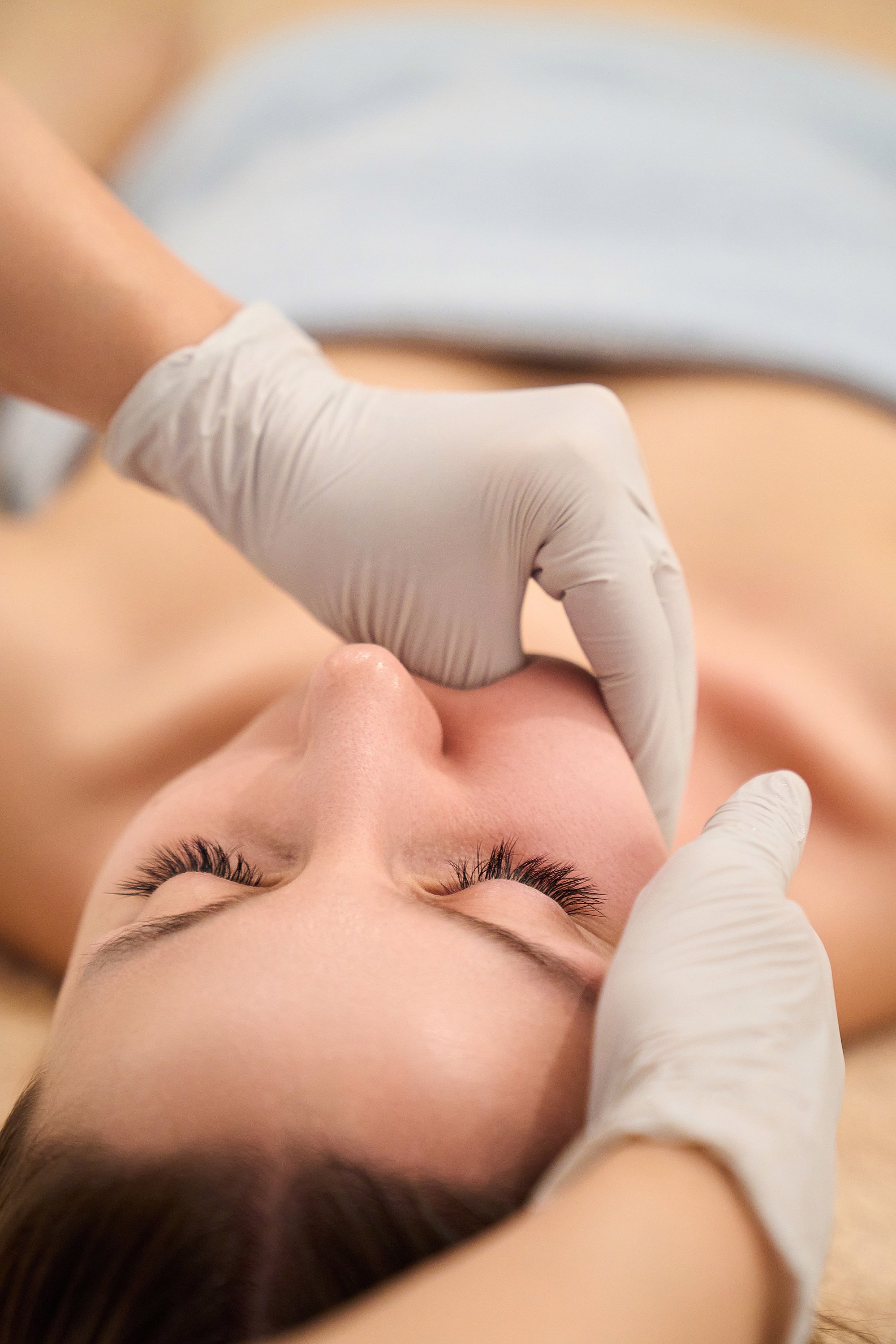
The client in your chair has changed. A few years ago she came in for a facial and left glowing, satisfied with clean, hydrated skin and a pleasant hour. Today, many clients arrive with a much more sophisticated understanding of facial tension, jaw discomfort, lymphatic drainage, fascia, and hands-on sculpting techniques. Increasingly, clients are looking for more than product application alone. They value skilled manual work and practitioners who understand how the face relates to the jaw, neck, scalp, soft tissue, and broader patterns of tension.
For beauty, massage, and wellness professionals, this shift creates an opportunity to develop a more sophisticated hands-on skill set and offer treatments that go beyond a conventional facial sequence. Advanced manual skills can help practitioners differentiate their work and create a more specialized client experience. This is the context in which advanced FaceBioLift™ training can become a meaningful next step for practitioners who want to deepen their manual skills and develop a more integrated approach to facial treatment.
Why Advanced Hands-On Skills Matter More in Modern Facial Practice
Two currents are running at once, and they meet exactly where FaceBioLift sits. Alongside the continued popularity of injectables, devices, and other aesthetic procedures, there is also strong interest in non-invasive approaches that preserve natural expression and rely on skilled manual work. At-home devices have also made technology more accessible, which makes the practitioner's hands-on skill, judgment, and ability to adapt a treatment even more important as points of differentiation.
Many clients are looking for visible improvement while maintaining natural expression and avoiding more invasive intervention, and they have specific expectations:
treatment that works with the face rather than forcing or freezing it;
a practitioner who understands how muscular tension, soft-tissue restrictions, fluid dynamics, and the relationship between the face, jaw, neck, and scalp can influence what they see and feel;
advanced hands-on techniques that go beyond conventional surface-focused facial work, including myofascial, lymphatic, intraoral (buccal), BMS/vibrotherapy, and instrument-assisted techniques;
an experience that is expert and considered, not a scripted routine run on autopilot.
The emphasis is not simply on learning individual techniques, but on understanding how and when to integrate them into a complete, responsive facial treatment. For practitioners who want to specialize in advanced manual facial work, developing these skills can create clearer differentiation and support a more specialized, premium treatment offering. This is the kind of professional development FaceBioLift™ Training is designed to provide.
What Sets FaceBioLift™ Training Apart from a Technique-Based Massage Course
Plenty of courses teach facial massage. What distinguishes FaceBioLift is that it is not a single technique but an integrated method, developed by SENSO founder Valerie Terletskiy through years of professional practice, continued study, and refinement of advanced facial manual work, and taught through SENSO Academy. A central part of the training is learning not only the techniques themselves, but how to observe, feel, and adapt the work according to the tissue response.
The method brings together a full stack of modalities rather than one signature move, and a practitioner learns to work across all of them as a connected system
| Component | What it does in the treatment |
|---|---|
| Myofascial work | develops the practitioner's ability to work with tissue restriction, mobility, depth, and pressure |
| Intraoral (buccal) technique | precise intraoral work with facial and jaw structures, with attention to hygiene, positioning, pressure, and tissue response |
| Lymphatic principles | integrates gentle directional work to support fluid movement and reduce visible puffiness where appropriate |
| BMS / vibrotherapy | controlled mechanical stimulation integrated into the treatment protocol |
| IASTM | instrument-assisted techniques used selectively to work with tissue mobility and restriction when indicated |
The techniques are only part of the training. Equal emphasis is placed on body mechanics, quality of touch, pressure and depth, practitioner positioning, tissue observation, treatment flow, and learning how individual techniques integrate into one complete FaceBioLift™ session.
The training is built around demonstration, guided hands-on practice, repetition, correction, and integration. Students spend the majority of the four-day intensive practicing rather than simply watching technique demonstrations.
Just as important as the modalities is the scope. FaceBioLift™ approaches the décolleté, neck, face, and scalp as interconnected regions rather than treating the face in isolation. The practitioner learns to consider how tension and restriction in surrounding regions may influence facial movement, comfort, and the overall treatment strategy.
The genuinely distinctive part, though, is what the training does beyond teaching a sequence. FaceBioLift follows one core protocol, but the real skill lies in adapting it live to the tissue in front of you, adjusting focus, depth, pressure, rhythm, and time according to how the tissue responds during the session. The goal is not simply to memorize choreography, but to develop the observation and tactile judgment needed to work responsively within the FaceBioLift™ framework. This emphasis on repetition, correction, and tissue response is intended to help practitioners leave the training with greater confidence and intention in their touch, rather than simply memorizing a new sequence.
How Advanced Training Can Expand a Practitioner's Skill Set
FaceBioLift™ Training is designed to deepen the practitioner's existing skill set and provide a structured method that can be integrated into a more advanced, individualized facial practice. The practical effects are concrete:
You gain a structured advanced manual method that can help differentiate your treatment offering and support a more specialized positioning.
You receive hands-on instruction in intraoral (buccal) techniques, with attention to positioning, hygiene, pressure, tissue response, and how the intraoral work fits into the broader FaceBioLift™ method.
You develop a stronger functional understanding of the relationships between facial muscles, soft tissue, lymphatic principles, the jaw, neck, scalp, and treatment response, allowing you to communicate your work more clearly and responsibly.
You develop a broader set of manual tools for working with facial tension, jaw and neck tightness, puffiness, tissue mobility, and natural facial definition, concerns that often require more than a conventional surface-focused facial.
The method also lends itself to thoughtful treatment planning over time, allowing practitioners to work with clients through an initial series and appropriate maintenance rather than treating every appointment as an isolated facial.
FaceBioLift™ also develops skills that are relevant to understanding jaw tension and the relationship between the face, neck, and masticatory structures. A dedicated TMJ-focused training program is being developed separately by SENSO Academy.
Advanced hands-on training can help practitioners differentiate themselves in a crowded beauty and wellness market, particularly when their work is built around skill, individualized assessment, and a treatment experience that cannot be replicated by a home device. For practitioners building a specialized manual practice, that level of expertise can become an important point of differentiation.
What makes advanced manual training valuable is not simply whether a particular technique is trending. Skilled touch, observation, adaptability, and practitioner judgment remain difficult to replicate with standardized treatments or home technology. Learning a method like this is less an add-on to your existing skill set than a step up in what you are, professionally, capable of offering.
For a practitioner deciding where to invest next, the value of advanced training lies in more than learning another technique. It is the opportunity to develop greater precision, tactile awareness, treatment strategy, and confidence in how you work with the face, skills that can shape the quality and identity of your practice for years to come.
Who FaceBioLift™ Training Is Designed For
FaceBioLift™ Training is designed for qualified estheticians, massage therapists, bodywork practitioners, and other beauty and wellness professionals who already have a foundation in hands-on client care and want to advance their facial manual skills. The program is especially relevant for practitioners who want to move beyond a conventional facial sequence and develop greater precision, tactile awareness, treatment flow, and confidence in advanced hands-on work.
Practitioners are responsible for applying the techniques they learn in accordance with the professional requirements applicable to their individual practice.