
Why SENSO Skin Experts Built Its Studio Around Touch, Not Technology Alone
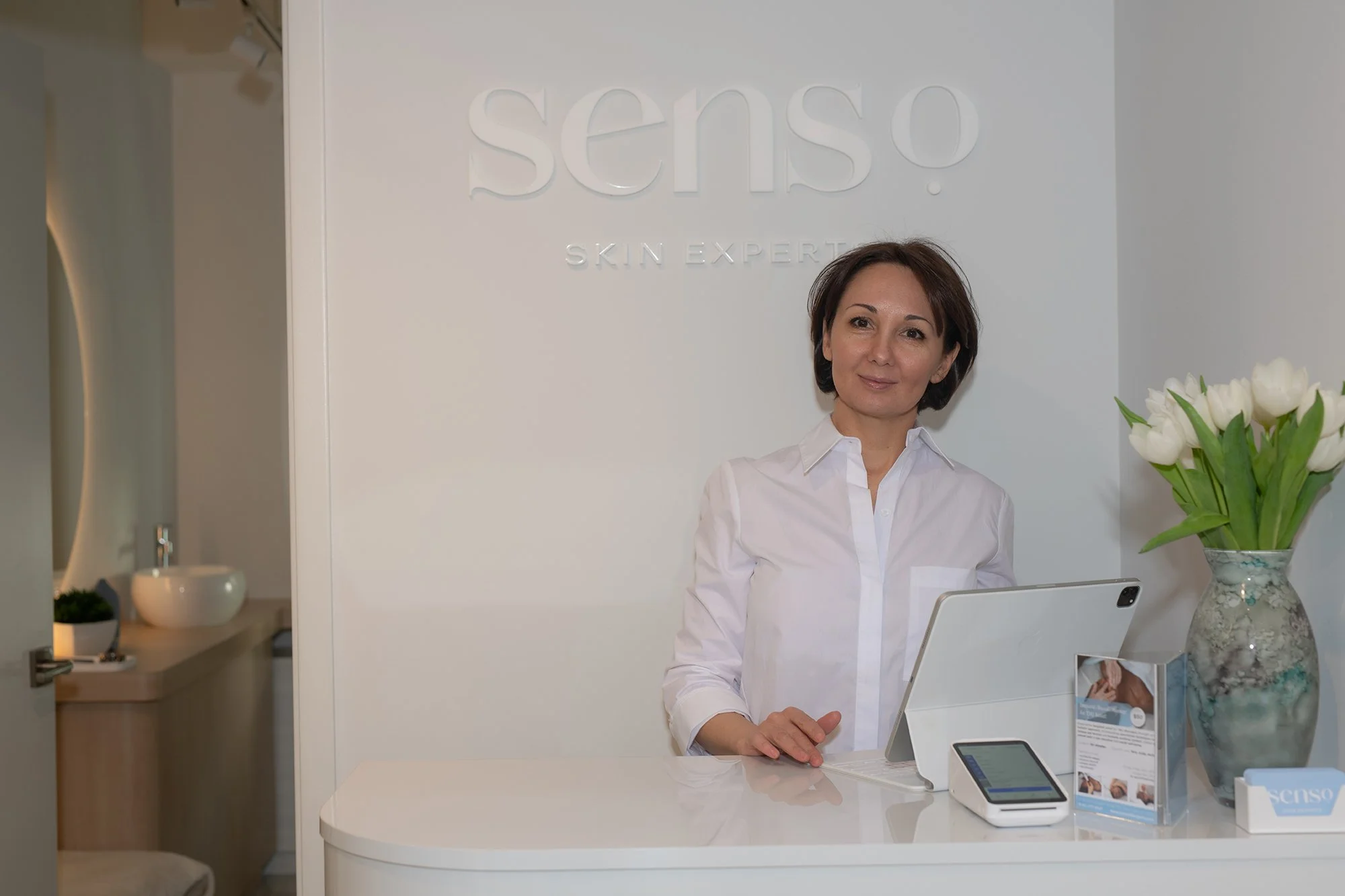
Walk into many aesthetic studios today and technology often takes center stage: radiofrequency, microcurrent, LED, and an ever-growing list of devices designed to target specific concerns. In that environment, it is easy for the practitioner's hands, and the information they gather from the tissue, to become secondary.
SENSO was built around a different hierarchy: the practitioner's hands lead, and technology is chosen to support the treatment rather than define it, and that ordering is deliberate rather than nostalgic. It reflects a specific belief about how meaningful facial treatment happens: through careful observation, responsive touch, and an understanding of how the face relates to the surrounding tissues and the body as a whole, and it is the reason the philosophy behind SENSO's non-invasive aesthetic treatments in NYC reads differently from a clinic organized around its equipment list. To understand why, it helps to start with where the method came from.
The Philosophy behind a Hands-First Approach in a Gadget-Driven Industry
FaceBioLift™ did not begin with a device. It developed through years of hands-on practice, continued study, observation, and refinement. It began with years of professional practice, continued study, and hands-on refinement, out of which founder Valerie Terletskiy developed and named the technique: an integrated manual method designed to work with facial tension, tissue mobility, fluid movement, natural definition, and the relationship between the face, neck, scalp, and nervous system. The method grew from touch, from the accumulated understanding of how facial tissue actually responds, and that origin is not a marketing detail. It is the entire point.
The belief underneath it is straightforward. At SENSO, the face is understood as more than a skin surface. Muscles, fascia, fluid dynamics, habitual tension, the jaw, neck, scalp, and nervous system all contribute to how the face looks and feels. What skilled hands add is the ability to feel, interpret, and respond to those patterns continuously throughout the treatment, something a preset device protocol cannot do on its own. Technology can be adjusted and used intelligently, but it does not provide the same direct tactile feedback as hands-on work. A trained practitioner can feel differences in tissue tone, mobility, tenderness, and resistance from one area to another and adjust pressure, rhythm, depth, and focus in real time. That capacity to read and respond is precisely what the hands-first approach protects.
This is where a hands-on facial treatment in Manhattan clients receive at SENSO diverges from the gadget-led norm in concrete ways:
the treatment is adapted continuously to how the tissue presents and responds that day;
it allows access to forms of hands-on work that devices cannot reproduce, including precise intraoral (buccal) techniques;
it approaches the face as connected to the décolleté, neck, jaw, and scalp rather than treating each area in isolation;
the pacing, rhythm, pressure, and quality of touch are also designed to support a calmer nervous-system state, so the experience is not purely mechanical.
That is why technology at SENSO is never asked to replace practitioner judgment. Devices are used for the specific advantages they offer, while the hands remain responsible for reading the tissue and shaping the treatment.
Where Technology Supports and Extends the Manual Work
None of this makes SENSO anti-technology, and that distinction matters, because the hands-first philosophy is often misread as a rejection of tools. It is not. SENSO uses advanced technology selectively and intentionally, choosing each tool for a specific role within the treatment. What the philosophy governs is the hierarchy: technology is used to add capabilities that complement the manual work rather than becoming the treatment's organizing principle.
The clearest way to see this is where the devices actually sit within the treatments:
| Technology | How it is used | How the practitioner integrates it |
|---|---|---|
| JetPeel | needle-free exfoliation, hydration, and targeted infusion within selected facial and scalp protocols | selected according to the skin or scalp goal and integrated into a broader treatment plan |
| IASTM / Gua Sha–based tools | instrument-assisted techniques used selectively to support tissue mobility, address areas of restriction, and refine the treatment where needed | used only when the tissue response indicates it is useful |
| Biomechanical stimulation | controlled vibrotherapy used to support tissue stimulation and the overall treatment sequence | incorporated within the hands-led treatment sequence |
| LED light therapy | a finishing modality used to support skin recovery and overall skin quality | selected according to the skin condition and used as a supportive finishing step |
JetPeel is a good example of how this philosophy works in practice. In the facials it provides cooling lymphatic drainage; in scalp protocols, it allows needle-free delivery of targeted solutions beyond what manual application alone can achieve. It does real work. Its role depends on the protocol. Technology is integrated where it adds something specific, hydration, infusion, stimulation, or photobiomodulation, while the practitioner determines how it fits into the treatment as a whole. The tools add specific capabilities. The practitioner determines how those capabilities are used. That is the whole difference between a studio that uses technology and a studio that is organized around it.
What a Hands-Led Approach Changes for the Client
Philosophy is only worth anything if it changes what a client walks out with, and this is where the hands-first choice earns itself. Because the treatment is continuously adapted, the practitioner can respond to asymmetry, tension patterns, tissue sensitivity, puffiness, and changing priorities rather than treating every face in exactly the same way.
Clients tend to describe the experience in exactly the terms the approach predicts. One who valued the thoroughness of her session pointed to the technique itself and the evident depth of understanding behind it, the way the work combined genuine relaxation with precise sculpting and tension release, and left her feeling refreshed and lifted rather than merely finished. That is what responsive, hands-led work produces: a result that feels considered because it was, addressed to what her face was holding rather than to a generic protocol.
The practical differences show up consistently:
Hands-on work can address areas such as jaw and TMJ-related tension, neck tightness, tissue restriction, and facial holding patterns in ways that require direct manual contact.
Each treatment is personalized because pressure, depth, rhythm, timing, and focus are adjusted to the individual response.
Because the work addresses tension patterns, tissue mobility, fluid-related puffiness, and the surrounding neck and scalp rather than focusing only on the skin surface, clients often experience the treatment as more complete and integrated.
The experience is designed to feel calm, attentive, and deeply restorative while still remaining precise and results-focused.
There is also an important honesty built into this approach: every modality is used for what it can genuinely contribute, without asking one tool to do everything. SENSO does not rely on exaggerated promises around any single technique or device. The value comes from combining modalities thoughtfully and keeping expectations grounded in what each one can realistically do. Hands-on work can reduce tension, support fluid movement, improve tissue mobility, and refine the way the face's natural contours are expressed.
The SENSO Skin Experts story is not about choosing touch instead of technology. It is about knowing what belongs at the center. In an industry increasingly happy to let the machine lead, SENSO made a quieter and more demanding bet. At SENSO, the most important instrument in the room is still the practitioner's ability to observe, feel, and respond, and technology is most valuable when it supports that intelligence rather than replacing it. That balance is what makes the treatment feel different: precise without being mechanical, advanced without becoming impersonal, and results-focused without losing the quality of touch that defines SENSO.