
Your Face Is Part of Your Nervous System - Here’s Why That Matters

The face is often treated like a surface.
We talk about skin texture, puffiness, glow, wrinkles, redness, and facial tone as if they belong only to the outside. But the face is much more connected than that. It is linked to the nervous system, blood flow, temperature control, emotional expression, breathing patterns, and the body’s stress response.
That is why your face can change before you have words for what you feel.
A difficult conversation can bring heat to the cheeks. A stressful week can tighten the jaw. A moment of embarrassment can create a flush. Long-term tension can settle around the mouth and brow. The face does not simply “show” emotion. It participates in the body’s response to emotion.
This is where facial massage becomes more interesting than a beauty treatment. Skilled touch works with tissue, yes. But it also communicates with the nervous system through pressure, warmth, rhythm, and release.
The Face Listens to the Body
The autonomic nervous system controls many functions you do not consciously manage: heart rate, sweating, blood vessel tone, digestion, pupil changes, and thermoregulation. It has two major patterns most people recognize: sympathetic activity, often linked with alertness and stress, and parasympathetic activity, often linked with rest and recovery.
The sympathetic system helps prepare the body for action. Heart rate can rise. Blood pressure can shift. Sweat glands may activate. Blood flow can change in the skin. The parasympathetic system supports quieter functions, including digestion and recovery. Both systems are active all the time, adjusting the body moment by moment.
The face is part of that adjustment.
This is why emotional moments can be visible. The body does not ask your permission before changing facial blood flow or muscle tone. A sudden shock can make someone go pale. Social pressure can make the cheeks warm. Stress can make the jaw clench before the person even notices it.
The face is not being dramatic. It is responding.
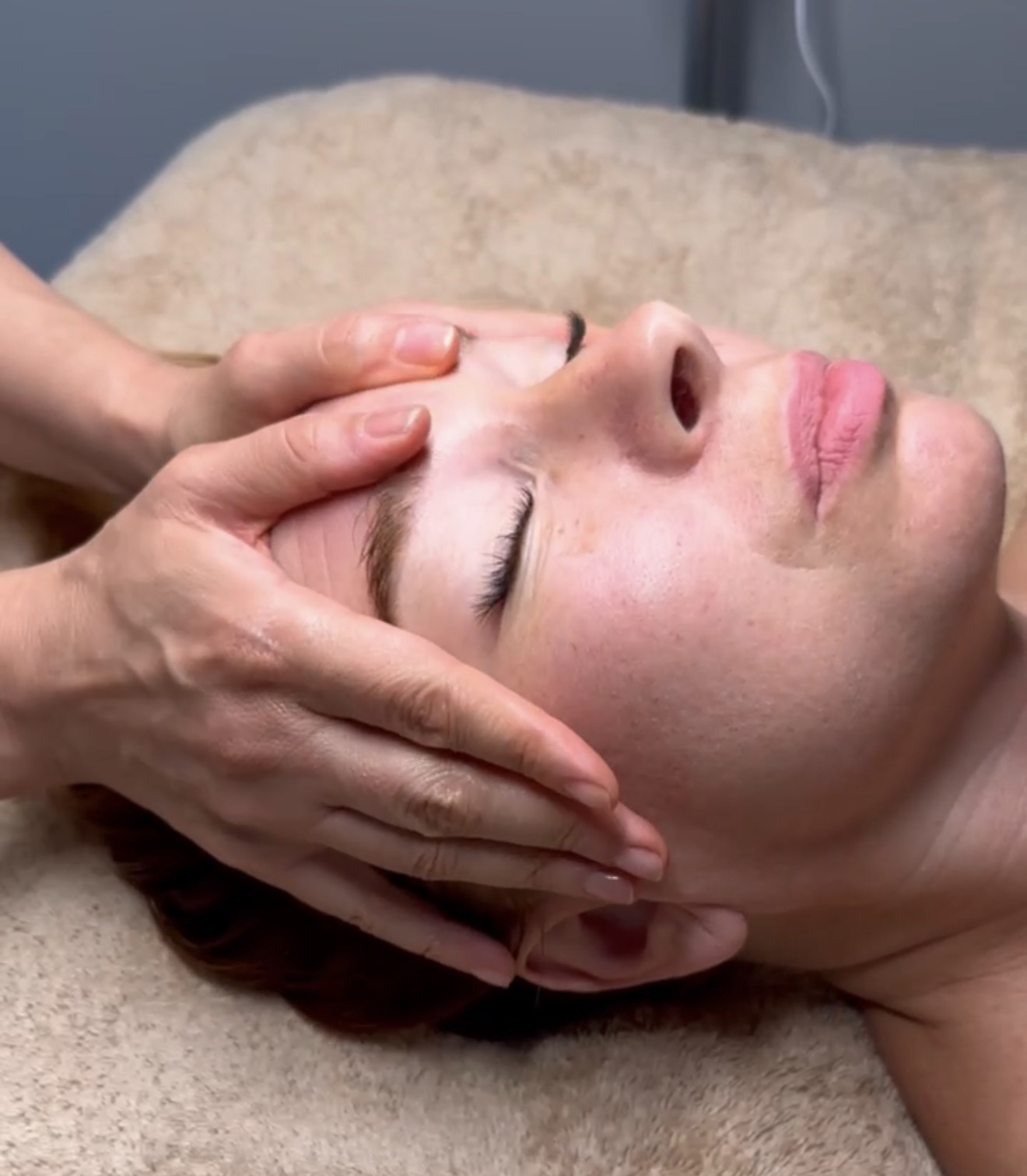
Why Blood Flow Changes the Way the Face Looks
A calm face and a stressed face often have different circulation patterns.
When the autonomic nervous system changes the tone of blood vessels, the face may look warmer, redder, paler, blotchier, or duller. Researchers studying blushing explain that redness appears in the face, ears, neck, and upper chest when hemoglobin increases under the skin. The same paper notes that blushing is biologically complex, with no single mechanism explaining it fully. Vagal changes, sympathetic blood vessel activity, and local facial vasculature may all play a role.
That explains why redness can feel so personal. It happens on the most visible part of the body, and it often appears during moments when we already feel exposed.
In one thermal imaging study, a social interaction involving a compliment changed both facial temperature and visible redness. The cheeks and forehead showed deeper red tones during the compliment condition compared with more neutral conversation.
That detail matters because it shows how quickly the face can respond to social emotion. A blush is not just color. It is nervous system activity, vascular change, body heat, self-awareness, and context arriving on the skin at once.
The Skin Has Its Own Nerve Network
The skin is not passive fabric. It is richly innervated and constantly communicating with the nervous system.
A review on the cutaneous autonomic nervous system describes the skin as a specialized organ that receives sensory information and helps preserve homeostasis. Its small nerve fibers help regulate sweating, blood vessel activity, piloerection, wound healing, thermoregulation, and hydration.
The face is especially sensitive because it has dense sensory and autonomic connections. It feels touch, temperature, pressure, irritation, and emotional arousal. It also reacts visibly through color, sweat, texture, and muscle tone.
So when someone says their face feels “tight,” “hot,” “frozen,” or “heavy,” that language is often more accurate than it sounds. They are describing nervous system signals as much as skin symptoms.
A facial treatment that ignores this will feel superficial. A treatment that respects it can feel regulating.
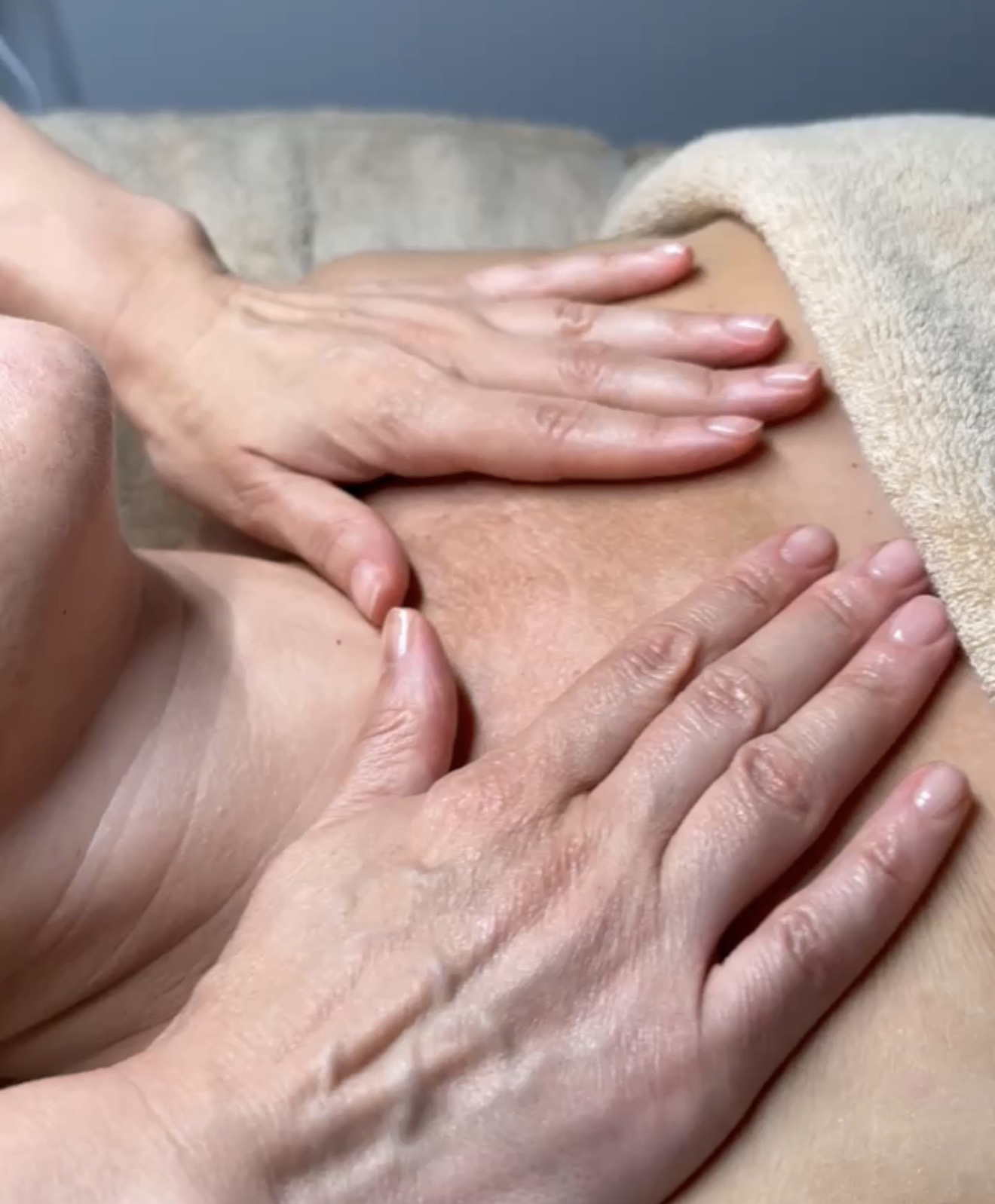
Muscle Tension Is a Nervous System Habit
The jaw, brow, temples, and neck often hold stress because they are highly responsive to nervous system state.
A clenched jaw is not only a muscle issue. It can be a protective pattern. The body braces. The mouth tightens. The forehead works harder. The shoulders rise. Breathing becomes shallower. After enough repetition, this pattern starts to feel normal.
Then the face changes.
The lower face may look heavier because the masseter muscles are constantly active. The brows may sit tense. The mouth may look pressed or guarded. The eyes can lose their softer expression.
This is why deep relaxation is often visible. When the nervous system receives enough signals of safety, the face no longer needs to hold the same armor. The jaw releases. The eyes soften. The cheeks look less compressed. The whole expression becomes less effortful.
That is not magic. It is physiology.
Temperature, Stress, and the Face
The nervous system also helps regulate skin temperature by changing blood flow. One review on cutaneous blood flow explains that hairless skin acts as a heat exchanger between the body and the environment. Blood flow to the skin rises or falls during cold defense, heat defense, fever, and alerting states. The paper also notes the familiar response of going “pale with fright,” showing how emotional arousal can affect skin blood flow.
The same review describes cutaneous blood flow as centrally regulated through sympathetic nervous system pathways. In simpler words, the brain and nervous system can alter how much blood reaches the skin, and those changes can show up as temperature shifts, paleness, flushing, or changes in skin tone.
For the face, this is important.
A flushed face may reflect social arousal or stress. A dull face may reflect poor circulation, fatigue, or tension. A puffy face may reflect fluid movement, inflammation, sleep quality, posture, and nervous system load. These patterns overlap. That is why the same person can look red, swollen, and tired during one stressful week.
The face is reading the room inside the body.
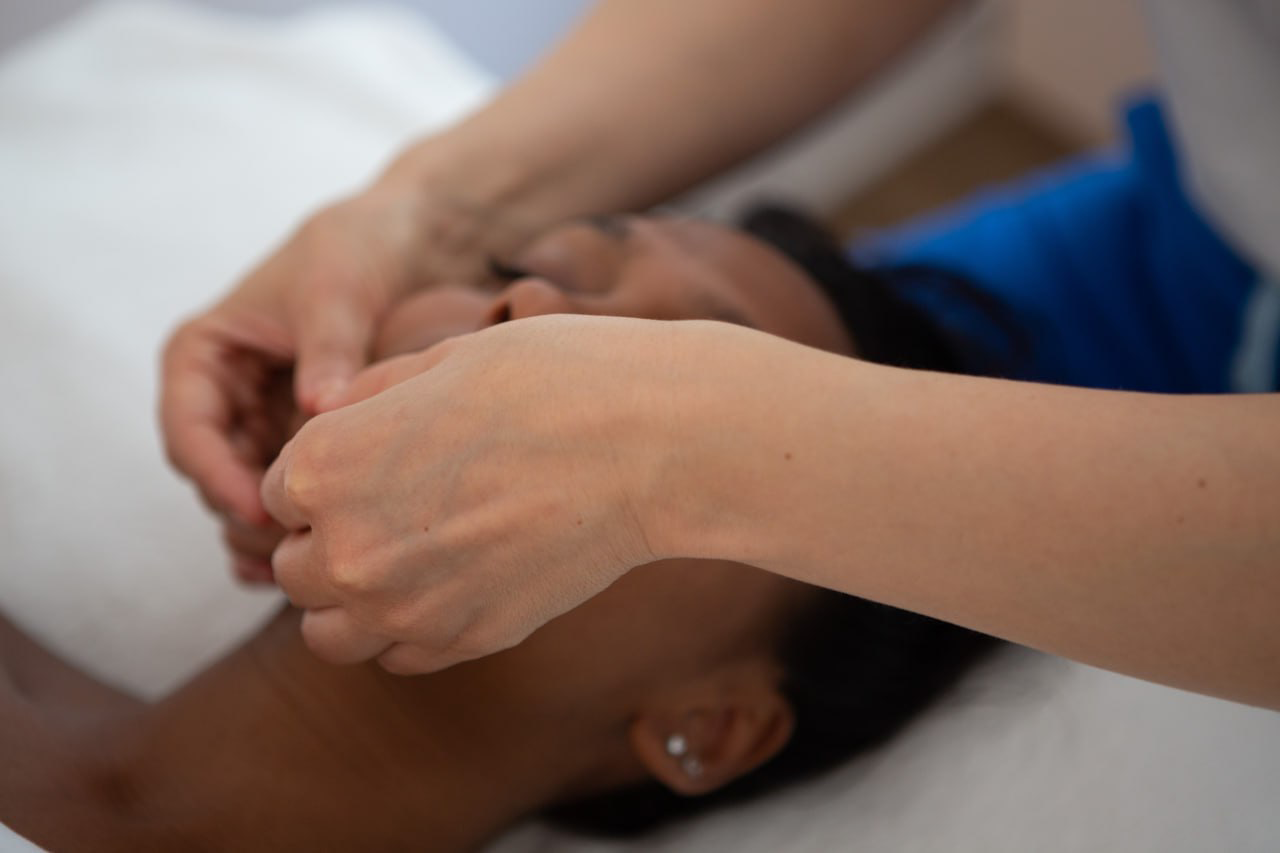
How Touch Communicates with the Nervous System
Touch is one of the most direct ways to speak to the nervous system without words.
Slow, steady pressure can feel grounding. Gentle lymphatic work can help the face feel less congested. Buccal massage can reach jaw and cheek tension that external work cannot fully address. Neck and temple work can reduce the feeling of bracing around the face.
A good facial massage should not feel like someone is simply moving skin around. It should feel organized. There should be a reason for the rhythm, the pressure, and the sequence.
For nervous-system-aware facial work, the focus is usually on:
softening the jaw and masseter muscles
releasing tension around the temples and brow
improving tissue glide in the cheeks and lower face
supporting lymphatic movement through the neck and face
calming the body through slower, steadier touch
helping the face return to a more neutral resting state
The goal is not to force the face into an artificial expression. It is to help the face stop guarding.
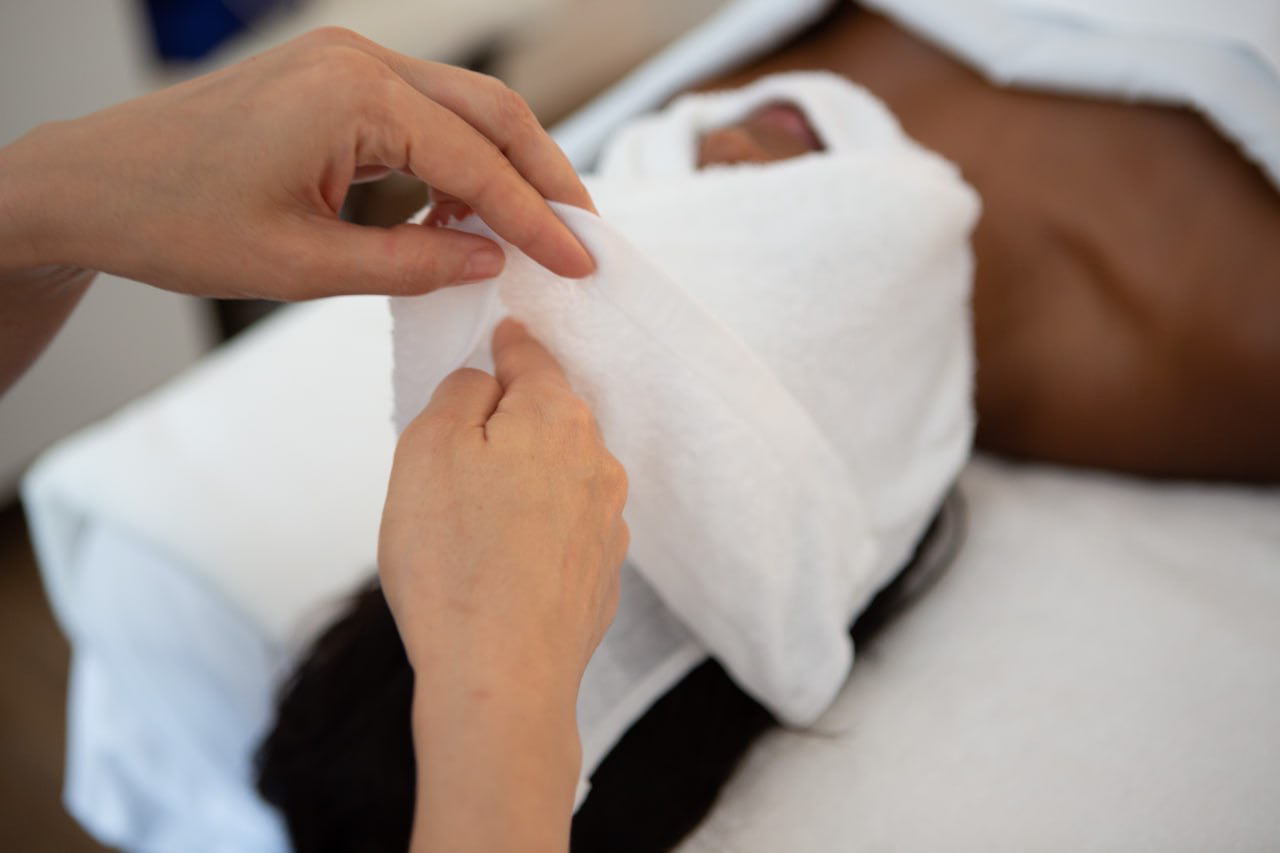
Why the Result Can Look So Different
After a good treatment, people often say their face looks “more rested.” That phrase is simple, but it points to several possible changes.
The tissue may be less tense. Fluid may have moved. Blood flow may have shifted. The jaw may be less clenched. The brow may be quieter. The nervous system may have moved out of a high-alert pattern.
This is also why the result is not always about dramatic contour. Sometimes the most meaningful change is expression.
The face looks more open.
The eyes look less strained.
The mouth looks less compressed.
The person looks more like themselves.
That kind of result can feel subtle in photos and obvious in real life.
The Bottom Line
The face is not separate from the nervous system. It is one of the places where the nervous system becomes visible.
Stress can tighten it. Emotion can color it. Blood flow can warm or pale it. Touch can help settle it. The skin, muscles, vessels, and nerves are constantly exchanging information.
That is why a truly thoughtful facial treatment should work with more than the surface. It should understand the face as living tissue connected to the whole body.
The aim is not only brighter skin or sharper contours. It is a face that feels less guarded, less compressed, and more at ease.
A calm face begins deeper than the skin.