
Can Facial Massage Replace a Facelift? Setting Realistic Expectations
Ask whether facial massage can replace a facelift and you are really asking two different questions that got tangled together. One is about surgery. The other is about what actually makes a face look heavy, blurred, or tired in the first place.
SENSO's answer starts from an unusual place: we are not against surgery, and not against injections either. The position is narrower and more useful than that. We restore function, because function defines structure, and structure defines how the face looks. Once you take that seriously, the whole comparison reorganizes itself.
What a Surgical Facelift Changes That Massage Cannot
A facelift is surgery. The surgeon works beneath the skin, repositions deeper tissue, removes or redistributes excess skin, and addresses the structural descent around the cheeks, jawline, and neck. That is why results last years rather than days.
Aging is more than dry skin and gravity. Bone remodels, fat compartments lose volume or migrate, retaining ligaments weaken, and the skin thins, often at once and at different depths. No massage reverses that anatomy. It cannot:
● cut away excess skin;
● reposition descended tissue;
● tighten the neck surgically;
● restore lost bone support;
● remove jowls caused by real laxity.
This is where the phrase non surgical facelift alternative Manhattan clinics lean on gets abused. A treatment can improve a face without being an alternative to an operation. Better contour and less puffiness are real. They are not surgical results without surgery.
What FaceBioLift Can Genuinely Deliver Instead
Here is the part the surgery conversation usually skips. A great deal of what people read as "aging" and try to fix with a scalpel is not fixed structure at all. It is function that has stopped working well.
When lymphatic flow slows, fluid pools and the lower face looks heavier. When the masseter braces for weeks, the jaw widens and thickens under the fingers. When the neck and scalp stay tight, they pull the whole lower face down. None of that is descended tissue. It is a functional problem wearing the costume of a structural one, and it responds to work, not surgery.
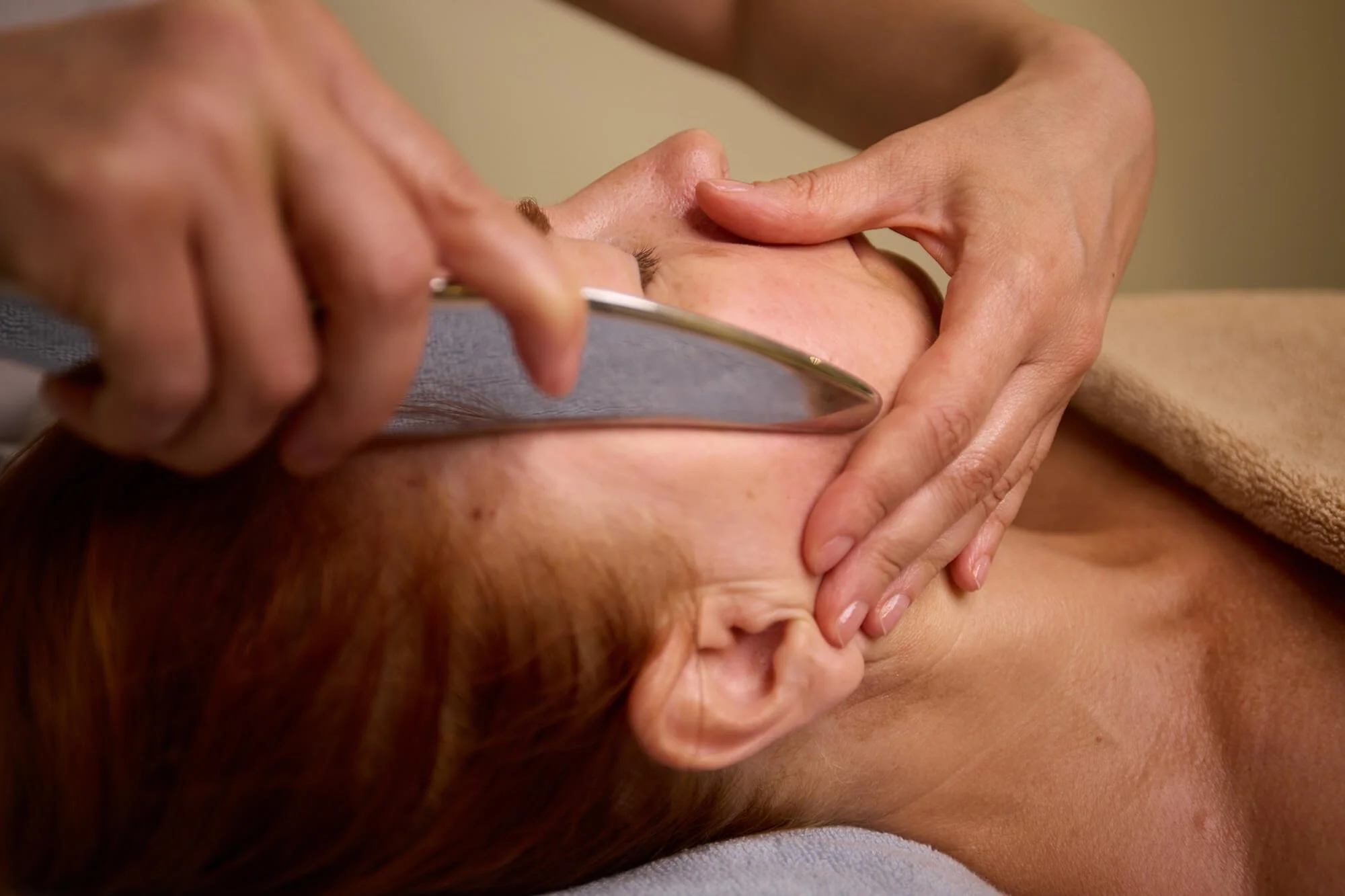
FaceBioLift™ addresses exactly that layer. The method combines external myofascial release, rhythmic lymphatic drainage, biomechanical vibration, and stainless steel IASTM tools with the intraoral, or buccal, component, gloved hands working inside the mouth to reach the cheek and jaw muscles from a second angle. A full session moves across the décolleté, neck, face and scalp as one connected system, because treating the jaw alone lets the surrounding tissue undo the result.
The protocol is single and consistent, yet adapted live to the person on the table. More time where the tissue is holding, less where it has already softened, pressure matched to what a muscle can receive that day. This is the "regulation before result" principle in practice: a face holds its changes only once the nervous system underneath it settles, which is why a steadier baseline comes from repetition rather than a single dramatic visit.
The honest result reads like this: the jaw feels less locked, the cheeks look lighter, the lower face a little more defined, one side moving more freely. You look rested but entirely like yourself. Clients describe it in those terms too, leaving lifted, refreshed and glowing, or pleased to look younger and healthier without going near botox or any similar procedure. There is objective support for measurable change as well. A 2023 systematic review of 20 randomized trials found hands-on techniques improved jaw pain, mouth opening and jaw-related disability, with clearer gains over repeated treatment. That is measurable change in muscle and movement, not permanent tissue repositioning, and the distinction is the whole point.
How Long Do the Results Last?
The first change often appears within hours. Puffiness reduces, jaw tension eases, and the face looks more open once clenching and fluid stop making it appear heavy.
Then life resumes. You sleep on one side, eat something salty, take a flight, clench through a deadline, and the tension rebuilds because the habits behind it did not vanish in the appointment. Some people hold the result several days, others a couple of weeks.
Regular sessions slow how fast the face returns to its tightest state, so the improvement becomes a steadier baseline rather than a before-and-after moment. That is the better outcome anyway. Nobody wants to look sculpted for Tuesday afternoon and exhausted by Thursday.
Who Is a Good Candidate for FaceBioLift?
FaceBioLift makes the most sense when the concern is functional and changes day to day. You may be a good fit when:
● the jaw feels tense or overworked;
● the face looks puffier after poor sleep or travel;
● one side feels tighter than the other;
● the lower face looks heavy but is not permanently loose;
● you want gradual, natural improvement without downtime.
It also suits younger clients with no advanced aging at all, where the real issue is stress, clenching, or fluid rather than laxity. For them, weighing facial massage vs facelift NYC surgeons offer barely makes sense; an operation would be wildly disproportionate. And it suits someone considering surgery later but not ready now, improving the face while they think or decide whether the concern bothers them enough to operate.
Who Is a Better Candidate for a Facelift?
When the change is structural and present every day, surgery becomes the honest answer. The jawline stays blurred even when puffiness is gone. The cheeks have descended. Loose skin remains regardless of sleep, hydration, or massage. Here, restoring function helps how the face feels, but it will not remove tissue that has genuinely moved.
A surgical consultation may fit when someone:
● has moderate or significant facial and neck laxity;
● wants a larger, longer-lasting change;
● understands the recovery and risks;
● is medically suitable and holds realistic expectations.
Natural facelift results do not mean barely noticeable ones. They mean a face that looks refreshed rather than pulled or unfamiliar, which depends on the surgeon and the anatomy, not on avoiding surgery.
You Do Not Have to Pick a Side Forever
Massage and surgery are framed as rivals. They are not. They act on different problems, which is clearer side by side:
| FaceBioLift | Facelift | |
|---|---|---|
| Works on | tension, puffiness, tissue mobility, function | descended tissue, excess skin, structure |
| Depth | muscle, fascia, lymph, nervous system | beneath the skin, surgical |
| Result lasts | days to weeks, steadier with repetition | years |
| Downtime | none | real recovery |
| Best when | the concern changes day to day | the change is constant and structural |
Because function defines structure, restoring function first is often the smarter opening move, not the consolation prize. Some people use FaceBioLift for years and never want more. Others eventually choose surgery once function alone no longer addresses what has changed. Someone who has had a facelift can still benefit from the work afterward, once cleared, for tension and maintenance.
The mistake is asking massage to do surgical work. The opposite mistake, just as common, is treating every fluid-and-tension problem as though it needs an operation. Sometimes the face needs less tension, better sleep, and someone to work the jaw you have clenched since Monday. Sometimes the tissue has truly moved, and only surgery moves it back. A good consultation tells you which one you are actually dealing with.