
Facial Massage vs. At-Home Microcurrent and LED Devices: What's Worth Your Money?
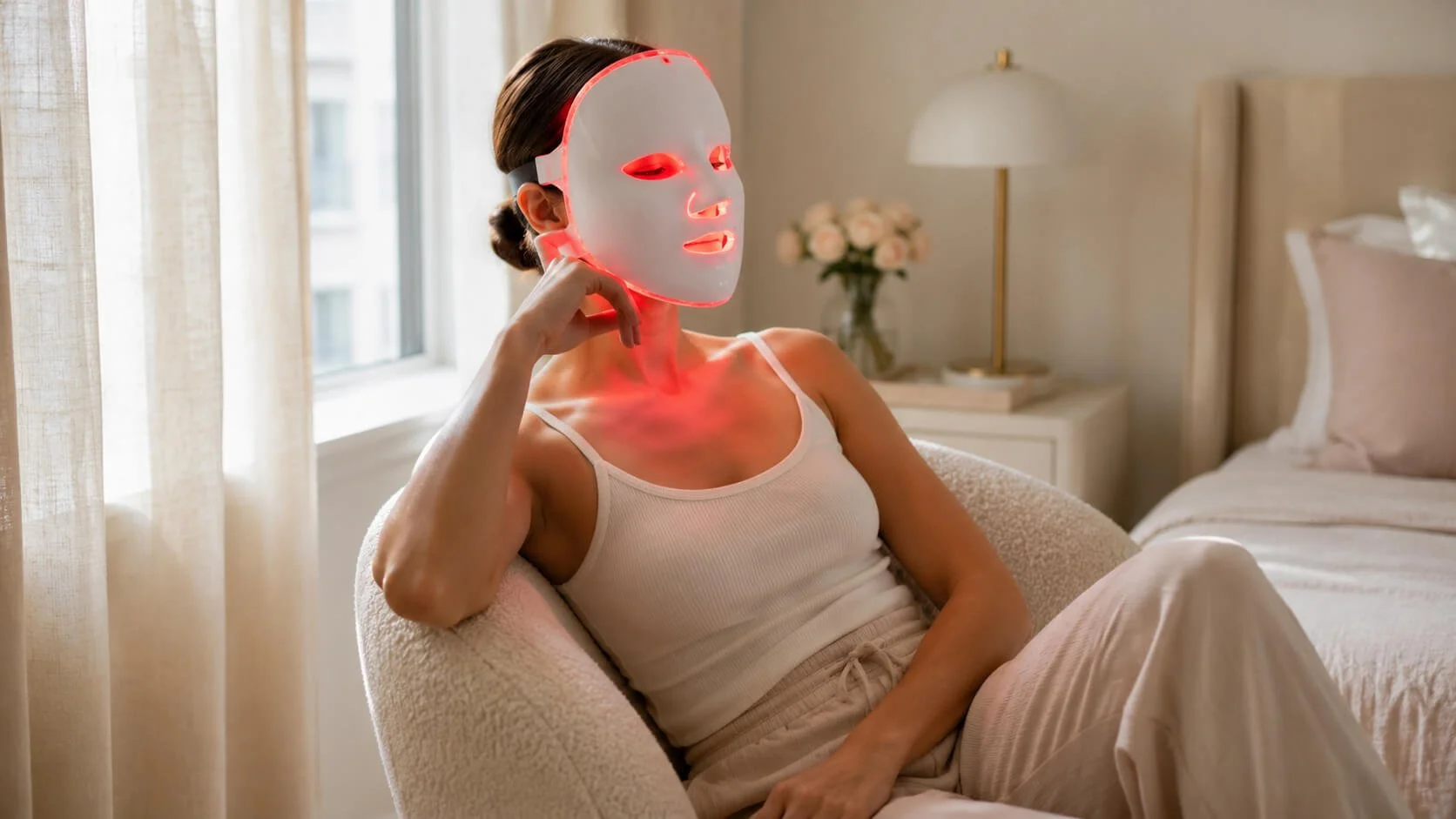
At-home facial devices are very good at looking important. They arrive in sleek boxes with an app, a charging cable, and sometimes a special gel you will forget to reorder.
For the first week, you use the device exactly as instructed. By week three, it has joined the gua sha and the expensive cleansing brush from 2022 in a drawer nobody opens.
Professional facial massage asks for less enthusiasm and more honesty. You lie down, someone works on the actual tension in your face, and you leave feeling different. It costs more per session, and the result is not permanent either.
So the real facial massage vs microcurrent device question is not which one wins universally. It is about what your face needs, what you will actually keep doing, and whether the device solves the problem you bought it for.
What At-Home Devices Can and Cannot Reach
Microcurrent devices run a low electrical current across the surface of the face, and depending on the model and your consistency, the face may look a little more toned or awake afterward. The effect tends to be subtle, which is worth saying, because the advertising usually treats one side of the face under studio lighting that deserves its own production credit.
Microcurrent suits people who enjoy a structured routine and want a fast, noninvasive step at home. The catch is consistency, since one energetic session every other Sunday achieves very little.
The deeper limit is that the device only follows your hand. Left to its programmed pass, it cannot:
● feel where the jaw is unusually tight;
● notice that one cheek moves differently from the other;
● tell whether it is gliding over muscle tension, puffiness, or an area best left alone;
● reach anything beneath the surface it is dragged across.
LED masks do something else entirely, exposing the skin to specific wavelengths of light, usually red or blue, aimed at the skin rather than at contour or muscle. A mask may earn a place in the routine of someone focused on breakouts, redness, or general appearance. It will not release a clenched masseter, work inside the mouth, or explain why one side of your jaw feels like concrete by six o'clock.
That is the flaw in framing an led face mask vs facial massage as competing versions of the same treatment. They are not doing the same job.
Where Professional Hands-On Work Does More
Hands can respond, which sounds almost too obvious until you notice it is the whole advantage. A practitioner feels that the left side of the jaw is denser, notices that the tissue around one cheekbone moves freely while the other feels stuck, and reduces, redirects, or holds pressure based on what the face is doing in that moment. A device repeats a programmed action; a person adapts.
Professional work also reaches what most home gadgets barely touch:
● the jaw, temples, and the dense masseter at the back of the cheek;
● the inner cheek and jaw muscles, through the intraoral, or buccal, component, worked with gloved hands from inside the mouth;
● the neck and the transition between the lower face and throat;
● the décolleté and scalp, treated as part of one connected system rather than isolated zones.
No handheld device on your bathroom shelf does any of that.
This is where SENSO's approach separates from any gadget. Although the FaceBioLift™ protocol is single and consistent, it is adapted live rather than delivered three minutes per cheek because a booklet says so, and that responsiveness comes from training and feel, not firmware. Someone who has trained in the method describes exactly this, leaving more connected, intentional and grounded in their touch, because the technique is built around reading tissue rather than running a fixed routine.
There is also a part no product chart mentions: it is difficult to relax while treating your own face. You watch the timer, check the mirror, wonder whether you used enough gel, and move the device while mentally drafting tomorrow's to-do list. During a professional session you stop managing the process, and for anyone who holds tension through the jaw and brow, that release alone changes how the face feels. Clients tend to describe the room as calm and comforting and the result as lifted and refreshed, which is as much about the nervous system settling as about any single stroke.
Where the Gadgets Win
Professional massage does not take every category, and it would be dishonest to pretend otherwise. Devices have real advantages:
● they are available whenever you remember them, with no commute, appointment, or per-session fee;
● after the purchase, the cost per use can drop low, provided the device avoids the drawer;
● microcurrent fits people who like small, frequent upkeep, ten minutes a few times a week;
● an LED mask asks almost no technique once positioned, so you can wear it while reading or half-answering emails.
Their best role, though, is stretching the time between professional sessions. Not replacement. Support.
The Expensive Device Problem
Price creates a strange kind of commitment. You spend $400 on a device, so now you need it to work, and every slight change in the mirror starts looking meaningful because admitting otherwise would be financially irritating.
Before buying anything, ask a dull but useful question: what exact problem am I solving? If the answer is jaw tension, facial tightness, or one side feeling heavier, a light mask makes little sense. If the concern is mainly the skin's surface, paying for repeated deep massage may not address the full issue either.
Then ask the more uncomfortable one: will I use this three or four times a week once the novelty fades? Be honest. Your bathroom cabinet already knows. The best at home facial device vs professional massage decision depends partly on personality, because some people love routines and will use a microcurrent tool for years, while others need an appointment on the calendar or nothing happens. Buying for the person you wish you were is expensive.
How to Combine Both Without Wasting Your Budget
You do not need a microcurrent device, an LED mask, weekly massage, facial rollers, sculpting tools, and four conductive gels. Your face is not a small technology startup. A simpler sequence works better:
Start with the main concern, and for recurring jaw tension, puffiness, or uneven tightness, make professional massage the first investment, since a practitioner assesses how the face feels, not only how it looks.
Keep the home routine minimal, adding a microcurrent device between appointments only if you enjoy it and have no reason to avoid electrical devices.
Let an LED mask stay a separate, skin-focused step rather than another thing layered on treatment days.
Check device instructions and professional guidance before combining anything, because irritated or recently treated skin does not need six methods stacked because Tuesday was your self-care night.
What Is Actually Worth the Money?
The honest breakdown comes down to matching the tool to the concern:
| Choose | When your concern is | Expect |
|---|---|---|
| Professional facial massage | tension, unevenness, puffiness, restriction | treatment adjusted as it happens |
| Microcurrent | a quick home routine you will keep up | modest, gradual visual change |
| LED mask | the skin surface, not muscle or contour | skin-focused support, no contour work |
| None of them | panic after bad bathroom lighting | buyer's remorse |
The smartest routine is seldom the most expensive one. It is the one that matches the concern and survives past the first week. A gadget can maintain a habit. Professional hands can find what the gadget keeps gliding past.