
How to Choose Advanced Facial Massage & Sculpting Training: What to Look For Before You Invest
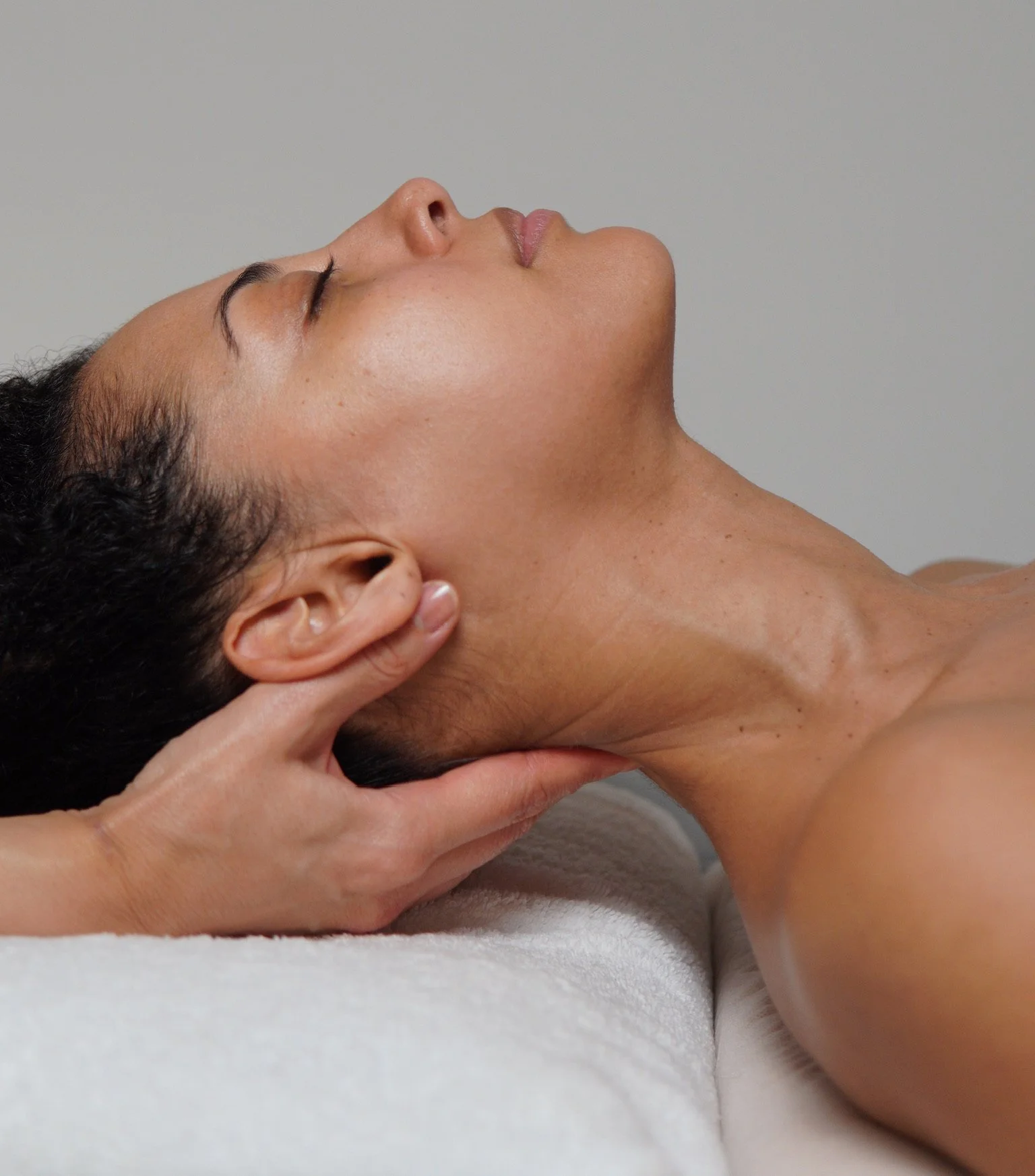
Facial massage training now comes in a lot of different formats. Some programs focus on one technique, some are entirely online, some run for a single day, and others offer certification through prerecorded lessons.
For a practitioner looking to develop real hands-on skill, the question should not simply be:
What techniques will I learn?
A better question is:
What will the training give me beyond a list of techniques?
This applies whether you are an esthetician, massage therapist or bodywork practitioner looking to develop more advanced hands-on facial skills.
When comparing advanced facial massage training, facial sculpting courses or other professional hands-on education, it is easy to focus first on the list of techniques.
But advanced manual work is not built by memorizing movements.
A practitioner needs to understand what they are touching, how much pressure to use, how deeply to work, how the tissue responds, how to position their own body, and how individual techniques connect into one coherent treatment.
These are the things I would look at before investing in any advanced facial massage or sculpting training.
How much of the training is actually hands-on?
Manual skill usually requires repetition and guided practice.
Watching a demonstration is important, but it is only the beginning. Students need time to perform the work themselves, receive the work, practice again and be corrected.
Receiving the treatment can also be valuable. It allows you to understand how different pressure, hand placement, rhythm, transitions and practitioner positioning actually feel — something that is difficult to understand through observation alone.
A training can include excellent theory, but if there is not enough time for the hands to practice, repeat and refine, the learning remains incomplete.
Will the instructor actually see and correct your work?
Small changes in hand position, direction, pressure, depth or practitioner posture can noticeably affect the quality of a technique.
For this reason, class size matters.
When the group is too large, an instructor may demonstrate a movement correctly but may not have enough time to observe and correct each student individually.
For advanced hands-on education, direct observation and individual correction are essential.
The student needs someone close enough to notice not only whether a movement looks right, but whether the contact, pressure, direction and body positioning are actually supporting the work.
Who is teaching — and what is their background?
A skilled practitioner and a skilled instructor are not always the same thing.
Someone may perform a technique beautifully and confidently, but teaching requires something more than demonstration.
Teaching is different. You have to be able to look at someone else’s hands, see where the problem is, and explain the correction in a way that actually makes sense to that student.
They should also be able to adjust their guidance to the individual student, because not every student struggles with the same thing.
One person may need help with pressure. Another with hand placement. Another with body mechanics, coordination or transitions.
It is also worth looking at the instructor’s own professional background: how long they have practiced, how much real client work they have done, how their approach or method developed, and what kind of advanced education they themselves have completed.
The quality of a training depends not only on how well the instructor can perform the work, but on how well they can observe, explain and correct it in someone else.
Will you practice on different faces?
No two faces are exactly alike, and those differences affect what you feel under your hands.
Working on different people during training gives students the opportunity to experience variation in tissue quality, tension, sensitivity and facial structure while the instructor is still there to observe and correct.
Working on different faces also gives you a much better way to judge whether the training teaches adaptable hands-on skill rather than one fixed sequence.
Does the training teach a method, or simply a collection of techniques?
Learning more techniques does not automatically make someone a better practitioner.
A strong training should explain why something is done, where it belongs within the treatment, what prepares the tissue for it, what should follow it, and how the individual parts connect.
In a well-integrated treatment, transitions between techniques often feel less obvious to the client.
A well-structured treatment should feel continuous.
The sequence matters because each stage influences the next. The techniques should not feel like separate pieces placed next to one another.
They should belong to the same treatment.
Does the training teach you to understand tissue response?
A protocol is important because it gives the practitioner structure.
But the hands still need to respond to the person on the table.
The practitioner should learn to recognize differences in tension, mobility, sensitivity and tissue response, and understand how those differences influence the work.
In FaceBioLift™, we describe this simply:
The method is consistent. The hands adapt.
Following a sequence and understanding what is happening under your hands are not the same skill.
Advanced training should develop both. The FaceBioLift™ training materials use this same distinction between learning the structure of the protocol and learning to respond to what is actually felt under the hands.
How much time is spent on theory — and how much on practice?
Anatomy matters.
A practitioner needs to understand where they are working, what structures are beneath the hands, why direction matters, and what the intention of the work is.
But much of this theoretical foundation can be learned before an in-person training through reading, online study and preparatory materials.
The role of theory during advanced hands-on training is to give context to the work — to make sure students understand where they are, why they are working there and what they are trying to achieve.
It should support the practice, not replace it.
When choosing advanced facial massage or sculpting training, I would always look at how much of the in-person time is actually spent working with the hands.
You can study anatomy from a book or on a screen.
What requires direct teaching is how that knowledge translates into touch — hand placement, pressure, depth, positioning, tissue response and correction.
Does the training teach you how to use your own body?
This is often overlooked.
Advanced facial work asks a great deal from the practitioner’s hands, wrists, shoulders and back.
Depth should not come from forcing through the fingers.
Good positioning, body mechanics, contact and use of body weight can all help create depth more efficiently.
Where you stand, how you move around the table, how your shoulders and wrists are positioned, and how you transfer pressure all influence the quality of the treatment.
They also influence how sustainably you can perform this work over time.
Body mechanics is therefore not separate from technique.
It is part of technique.
Is the training clear about the level of experience it expects?
Advanced education should be clear about who the program is designed for.
The school should be able to explain what level of practical experience is expected before entering the training and whether additional preparation or individual instruction is available when needed.
That transparency matters.
A practitioner should know before enrolling whether the program is designed for their current level or whether some foundational preparation would allow them to get more from the advanced material.
If you are unsure where your own experience fits, the question deserves more than a simple “beginner” or “advanced” label. We explore that separately in How advanced facial massage skills develop.
A certificate is only one part of the picture
A certificate confirms that a course was completed.
It does not by itself tell you how much supervised practice you received, how closely your work was corrected, how many different faces you worked on, or how much individual attention was available during the learning process.
These same questions shaped the way I developed FaceBioLift™ training at SENSO Academy: intentionally small groups, repeated hands-on practice, work on different faces, direct correction throughout the training, and a learning process built around demonstration, guided practice, repetition, correction and integration.
Before choosing advanced facial massage or sculpting training, ask:
How much of the course is actually hands-on?
Will the instructor observe and correct my work directly?
Who is teaching, and what is their professional background?
How small is the group?
Will I practice on different faces?
Am I learning a coherent method or simply individual techniques?
Will I learn how to understand and respond to tissue?
How much of the in-person training is theory, and how much is practice?
Will I learn how to use my own body efficiently?
Is the training clear about the level of experience it expects from students?
If I need additional preparation, is individual instruction available?
Those questions tell you far more about the quality of the education than the number of techniques listed in a curriculum.
Choosing the right training is only the first stage. How advanced facial massage skill develops after the course is a separate question — and just as important.
Learn more about the FaceBioLift™ Masterclass at SENSO Academy.