
JetPeel Technology: How Pressurized Infusion Compares to Needles and Injectables
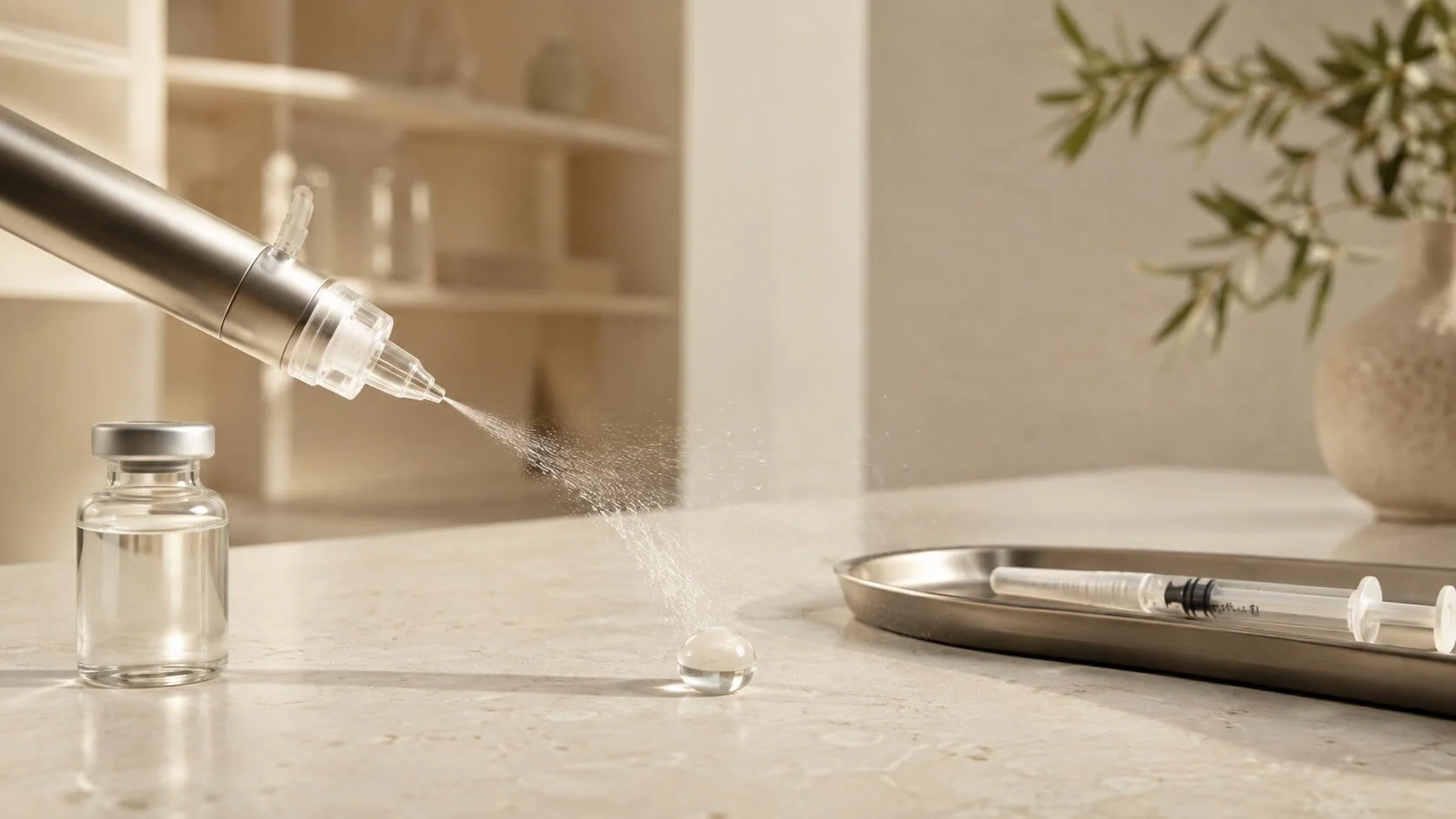
Needles make some people nervous. Not mildly uncomfortable, properly nervous. They hear "injectable" and immediately picture swelling, bruising, and several days spent examining their face from every possible angle.
JetPeel takes a completely different route. Instead of puncturing the skin, it uses a fast, pressurized stream of gas and liquid to cleanse, exfoliate, cool, and deliver selected solutions across the face. The skin stays intact. No needle, no injection points, no tense little countdown before every prick.
That sounds like an obvious replacement for injectables. It is not. The two approaches work at different depths and solve different problems, and understanding that difference is the only useful way to weigh jetpeel vs injectables NYC clinics put side by side.
How Pressurized Infusion Works Without Breaking the Skin
JetPeel uses a handpiece that sends a fine stream across the skin at high speed. The jet is narrow and controlled, and as it moves over the face it lifts surface buildup and delivers liquid solutions without a needle entering the tissue.
The sensation is unusual at first. Cool, fast, almost like a tiny pressure washer designed by someone who understood that this is your face and not a patio. The practitioner moves the handpiece across the forehead, cheeks, nose, jaw and more delicate zones, adjusting the approach as they go, with no scraping and no puncture. Depending on the plan, the session may fold in cleansing, exfoliation, hydration and infusion steps, with ingredients spread through the superficial layers using the pressurized stream.
That word, superficial, matters. A needle free infusion facial Manhattan providers offer can deliver hydration and skin-focused ingredients without physically opening the surface, but it does not place a substance at the depth a syringe reaches. The pressure does not secretly turn the treatment into an injection, however futuristic the machine looks.
What JetPeel Is Actually Good At
JetPeel makes sense when the main concern is the condition of the skin itself. The face looks dull after a long winter, makeup catches on dry areas, and the skin feels dehydrated, congested, or tired in that vague way skin does when nothing is dramatically wrong but nothing looks especially good either.
Unlike a syringe, which targets individual points, JetPeel moves across a larger surface, which makes it useful for a spread of concerns:
● dryness and dehydration;
● rough surface texture;
● dullness;
● mild congestion;
● uneven-looking skin;
● preparing the face before an event.
There is also the obvious advantage of no broken skin, which generally means less concern about marks and little interruption to the day. Some temporary redness can occur depending on the skin and the intensity used, but most people are not planning their week around recovery. You book the appointment and continue with your life, a genuine luxury in facial treatments.
What JetPeel Can Deliver That Injectables Cannot
This framing can mislead, because JetPeel does not beat injectables by reaching somewhere they cannot. Its advantage is the experience and the coverage. It treats a wide area without a series of punctures and combines cleansing, surface exfoliation, cooling and liquid delivery in one appointment, which injectables were never designed to do.
Put plainly: a filler appointment will not clean clogged pores, botulinum toxin will not exfoliate flaky skin, and a syringe of skin booster does not replace a full surface treatment. JetPeel may also suit people who want regular skin maintenance but are not ready for injections, do not want them, or cannot justify a medical procedure for a mild concern. That is an entirely reasonable position, and it echoes something SENSO says openly about its own work: not every tired-looking Tuesday requires a needle. The treatment can also give a fresh, hydrated finish shortly before a social event, without the risk of visible injection points, which is a broad reset with very little drama.
Where Injectables Still Do More
Injectables work below the surface, which is the entire point. Dermal filler adds volume, supports certain areas, or alters contour. Botulinum toxin affects muscle activity in targeted spots. Injectable skin treatments place substances into or beneath the skin at controlled depths. JetPeel cannot recreate any of that, and it is worth being blunt about the ceiling. It cannot:
● replace lost cheek volume;
● reshape the lips;
● fill a deep fold;
● relax an expression muscle;
● build structural support along the jaw.
This is where some jetpeel technology explained pieces get carried away, talking about infusion and oxygen pressure and then gliding into promises that sound suspiciously close to filler. A smoother, more hydrated surface can make lines look softer for a while, and brighter skin can make the whole face look fresher, but improving the surface is not the same as filling tissue beneath it. The mirror may show a nicer version of the same structure. The structure itself has not changed. This is the same honesty SENSO applies to its manual work: better function and a better surface, without pretending to do what it does not do.
Hydration and Volume Are Not the Same Thing
This is probably the easiest distinction to miss. Hydrated skin can look plumper, fine dehydration lines soften, the cheeks catch light better, and the face looks less creased. That can be a lovely result, and it is still not added volume in the injectable sense.
Filler physically occupies space beneath the skin. JetPeel creates no such projection or support, and its plumping effect comes entirely from improving how the surface looks and feels. Think rested rather than rebuilt. For some people that is exactly enough; for others dealing with obvious volume loss or deeper folds it will not be, and neither group is wrong, because they are asking for different outcomes.
Which One Has More Downtime?
JetPeel usually takes this category. With no injection points, bruising and puncture-related swelling are not the usual concerns, and while the face may look slightly pink or feel sensitive after more intensive exfoliation, it fits easily into a normal week. Injectables are less predictable: some people barely mark, others bruise impressively from one tiny point and spend five days explaining that they are fine. Swelling can occur, results may need time to settle, and specific aftercare applies. That does not make injectables bad. It means they ask more from the calendar because they produce a different level of change.
Do You Have to Choose One?
Not necessarily, because the two are not doing identical work and can sit in the same broader routine. Someone might use injectables for volume or muscle concerns, then choose JetPeel at other times for hydration and surface upkeep. The timing needs planning, though, and freshly injected skin should not meet every available device just because the calendar lined up. More treatment is not automatically better; sometimes it is only more treatment, and a qualified provider should tell you how long to wait and whether a given facial suits you after an injectable.
What Is Worth Your Money?
The honest comparison is simpler than the marketing around it, and it lays out cleanly:
| JetPeel | Injectables | |
|---|---|---|
| Works | across the skin surface | within or beneath the skin |
| Best for | hydration, texture, dullness, congestion | volume, contour, expression lines |
| Downtime | minimal, mild pinkness | variable, possible bruising and swelling |
| Changes structure | no, freshens the surface | yes, structural or muscular change |
| Commitment | low, fits a normal week | higher, with cost and aftercare |
Choose JetPeel when you want fresher, smoother, more hydrated skin without punctures or meaningful downtime. Choose injectables when the concern lies deeper, such as volume loss, contour, or strong expression lines that a surface treatment cannot reach. And be suspicious of anyone promising that one is a complete substitute for the other. JetPeel works across the skin, injectables work within it, and the sensible routine matches the tool to the concern rather than the hype.